
CATALYST
DENVER MUSEUM OF NATURE & SCIENCE ONLINE MAGAZINE
World-Renowned Elephant Researcher Sits Down with Catalyst
Did You Know That Elephants Use Arbitrary Sounds, or Names, to Get Each Other’s Attention?
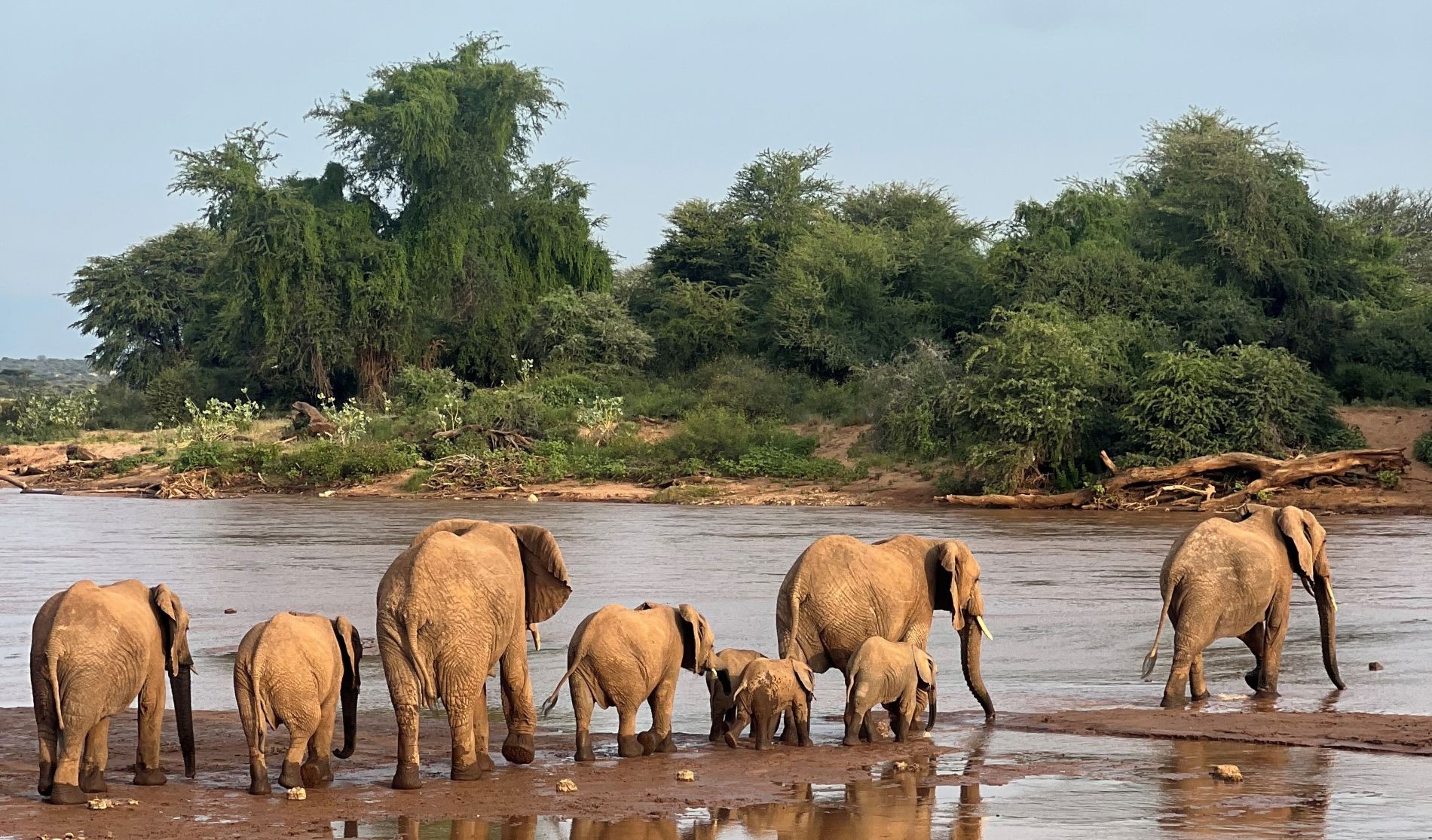
A family of elephants comes down to the river for a drink in the midday in Samburu National Reserve, Kenya. (Photo/ George Wittemyer)
Scottish biologist Iain Douglas-Hamilton devoted his life to studying, understanding and protecting the future of the highly endangered African elephant. Widely regarded as one of the leading authorities on the planet’s largest land mammal, he founded Save the Elephants, an internationally recognized organization known for its pioneering research and effective conservation of African elephants.
Last month, Dr. Iain Douglas-Hamilton passed away in Nairobi, Kenya at the age of 83. On Jan. 15, the Denver and wider Rocky Mountain community will celebrate the life and work of Dr. Iain Douglas-Hamilton with a special screening of “A Life Among Elephants” and panel discussion at the Denver Museum of Nature & Science.
The film documents Iain’s extraordinary life and relentless fight for elephants with emotional and inspiring footage, intimate access into the rich world he shared with elephants and powerful interviews — including contributions from the late primatologist and conservationist Jane Goodall and Iain’s surviving daughters, Saba and Dudu Douglas-Hamilton.
Following the screening of the film, we will be joined by Dr. George Wittemyer, chief scientist of Save the Elephants and Colorado State University professor. The talk will also feature the Museum’s Dr. Holly Lutz, associate curator of mammals and curator of “The Secret World of Elephants” temporary exhibition, for a short panel discussion on the ongoing work to preserve and protect these animals and their habitats.
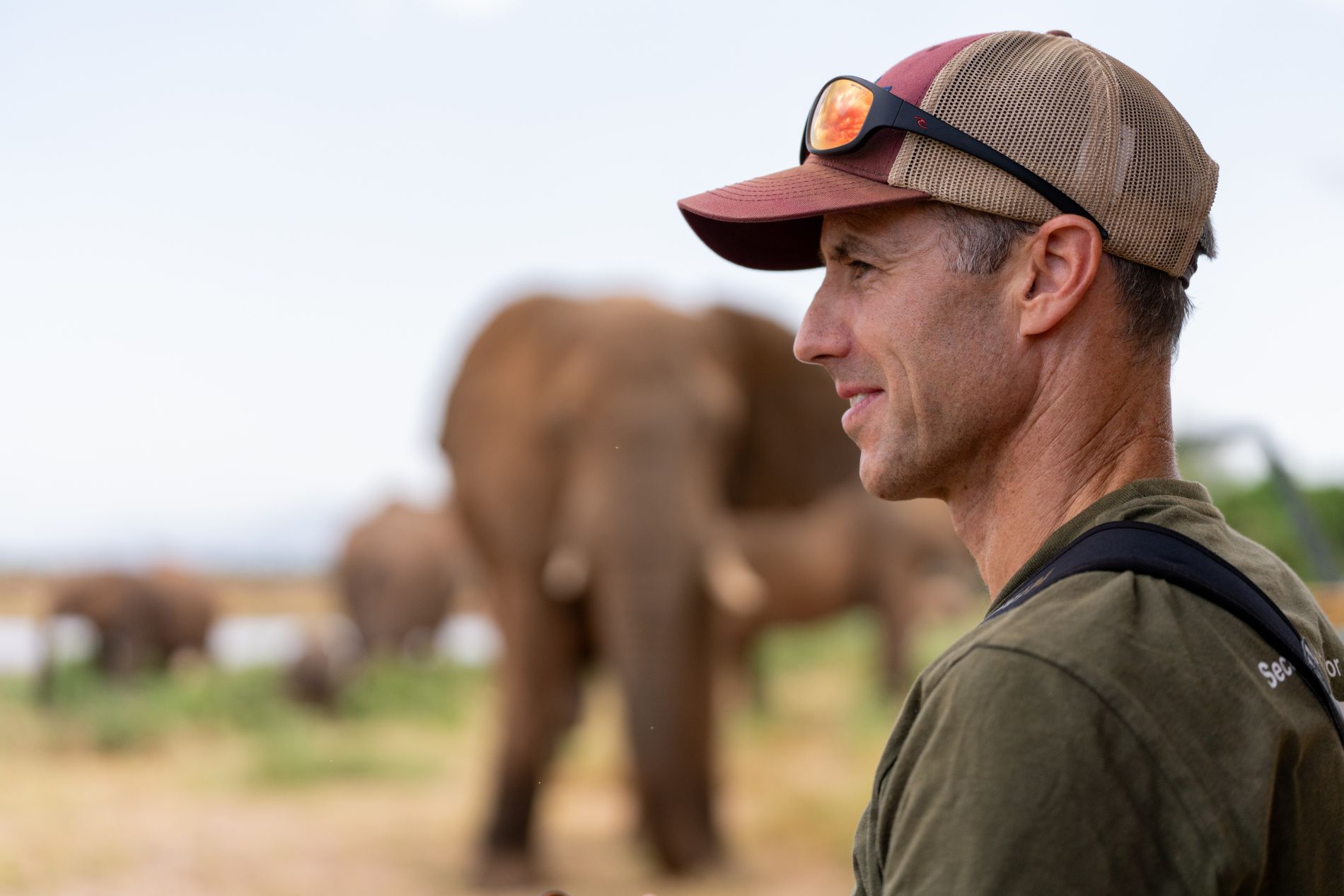
Dr. George Wittemyer conducting field work on elephants in Samburu National Reserve, Kenya. (Photo/ George Wittemyer)
To prepare for the event, we sat down with Dr. Wittemyer to discuss his life’s work dedicated to protecting a future for elephants and his research that has uncovered fascinating insights into their socially rich and emotionally deep worlds.
How did you first become interested in studying elephants, and what led you to build a career around understanding them and protecting their future?
I first became inspired to work with elephants when I met Iain Douglas-Hamilton and his daughter Saba on a college study abroad trip. I was deeply inspired by the African wilderness and hoped I could contribute to solving some of the wicked challenges those ecosystems are facing. I was lucky enough to be able to find funding to tackle one question after the other on elephants and their lives and continue to do so!
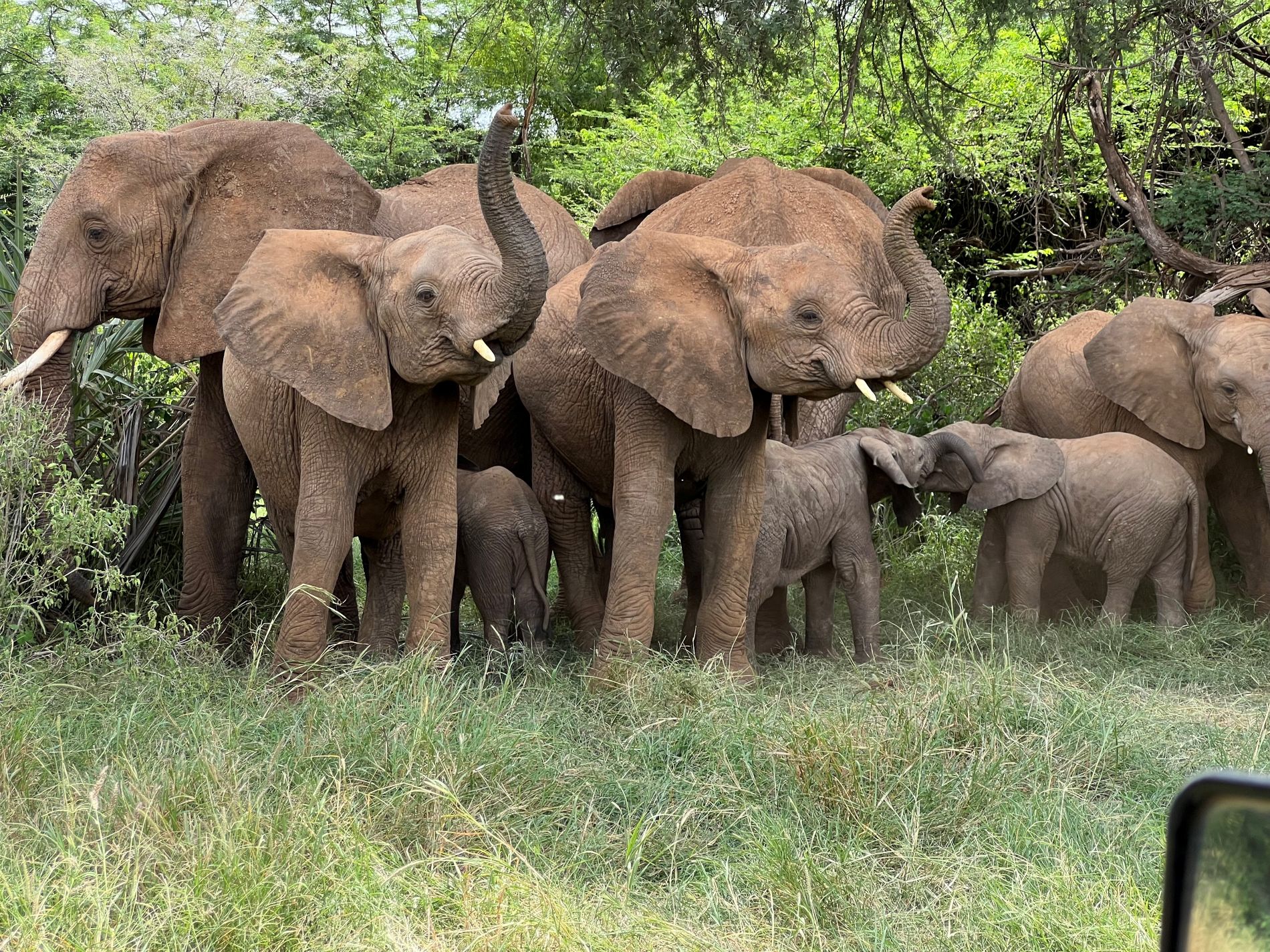
Two sisters smell as other elephants approach their resting spot in Samburu National Reserve, Kenya. (Photo/ George Wittemyer)
Can you tell us about your work and current research focus?
I am currently the chief scientist at Save the elephants. Our research is quite multifaceted, trying to answer questions across a variety of aspects of elephant lives and conservation issues. Our core research is focused on the behavior and demography of the individually known elephants inhabiting the Samburu National Reserve in Northern Kenya. We have active programs studying the sociality, movement and space use, demography, vocal communication and physiology of wild African elephants.
You are widely recognized for your groundbreaking research on elephant communication, including findings that suggest elephants use personalized, name-like calls for one another. How did your team make this discovery, and why is it such an important insight into elephant intelligence and social behavior?
During our field work, one is immersed in elephant social lives just as a function of observing and recording their behavior. Elephants are constantly communicating, or rumbling, to each other and we have seen quite remarkable exchanges that were suggestive that they were having individual conversations even when among many elephants. We figured they must have some way to identify who they were talking with.
From there, we set out to assess if elephants use vocal labels, or names, for other elephants as we do. Several other species, though quite few, have been found to use vocal labels to get the attention of other individuals. Most of these get the attention of another individual by imitating their vocalizations. One of the exciting results in our work was that elephants do not imitate when they call each other. Rather they are using arbitrary sounds as names, similar to how we humans use non-imitative names to get each other’s attention. This is really exciting in that it indicates elephants are capable of abstractly connecting sound to objects.
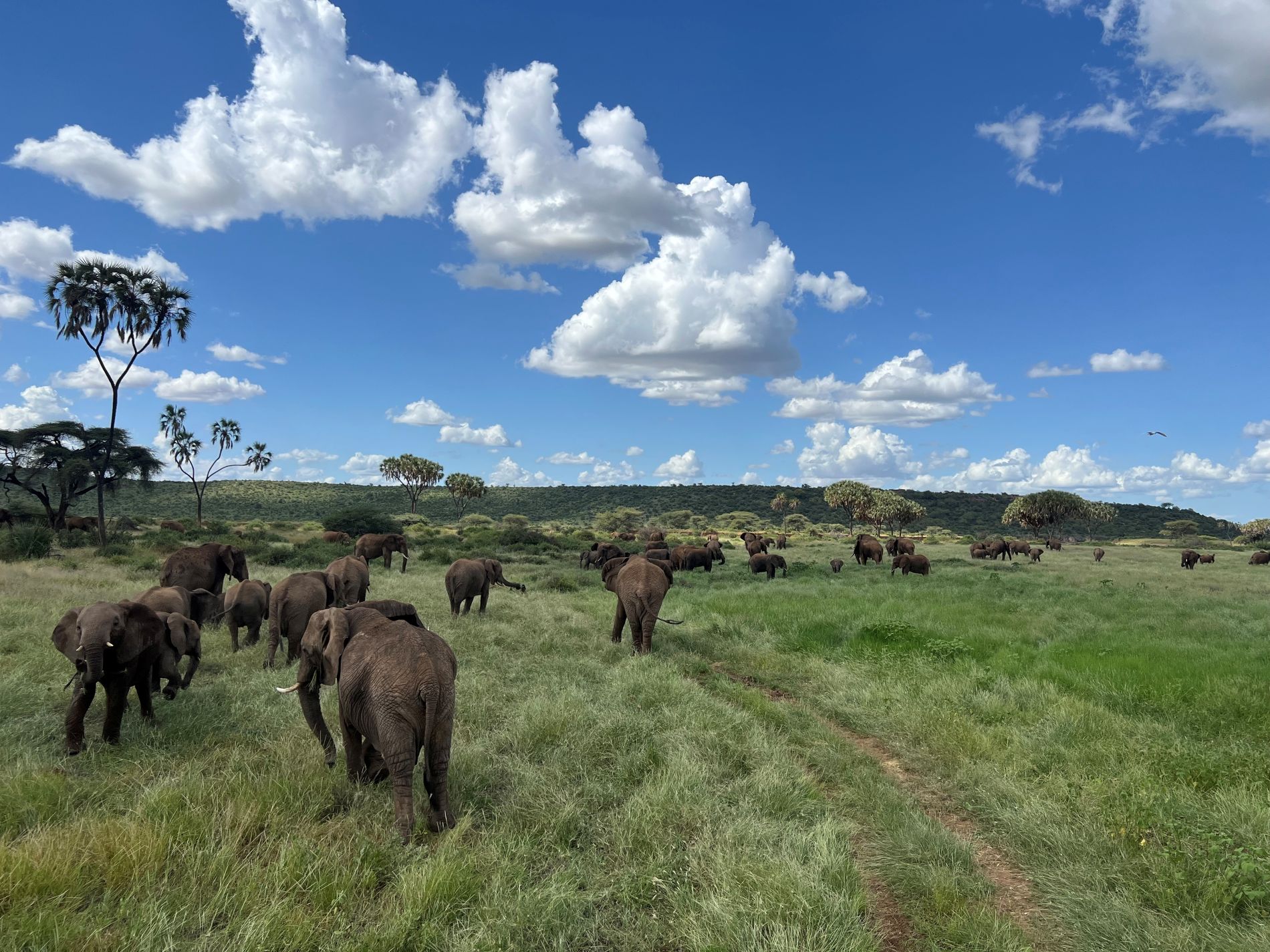
Aggregation of multiple elephant families are common during the wet season, as seen here in Samburu National Reserve, Kenya. (Photo/ George Wittemyer)
Beyond this aspect of their communication, what are some of the most surprising or fascinating things you’ve learned about elephants through your research?
Working with elephants, the most remarkable thing one is constantly shown and reminded of is how tightly bonded elephants are to each other and how sentient they are. Elephants are constantly touching, rubbing against, smelling and talking to each other. They play with each other, mothers discipline their young, they explore and are curious. Watching elephants over many years makes it clear how sentient a species they are and how little we understand them.
For instance, they are well known to show very unique behavior around their dead, or remains of other elephants, but we have no idea what is going on in their minds when we see this interesting behavior.
Elephant populations around the world continue to face serious threats, from habitat loss to poaching and human-wildlife conflict. Based on your experience, what conservation strategies show the most promise for slowing — or even reversing — these population declines?
We have two critical risks to elephants. The first is the ivory trade and the buying and coveting of elephant ivory. This has to be tackled by eliminating demand for ivory, which is difficult given it has been a sought after material by humans for millennia. The second critical risk is conflict with humans over land and resources, primarily in regard to agriculture, water and space. We must figure out ways for elephants and humans to coexist peacefully, limiting the negative impacts on each other. For this, the best solutions are really well thought out landscape level planning, so we don’t put highly preferred crops against the boundaries of elephant range or sever critical corridors with highways and rail lines.
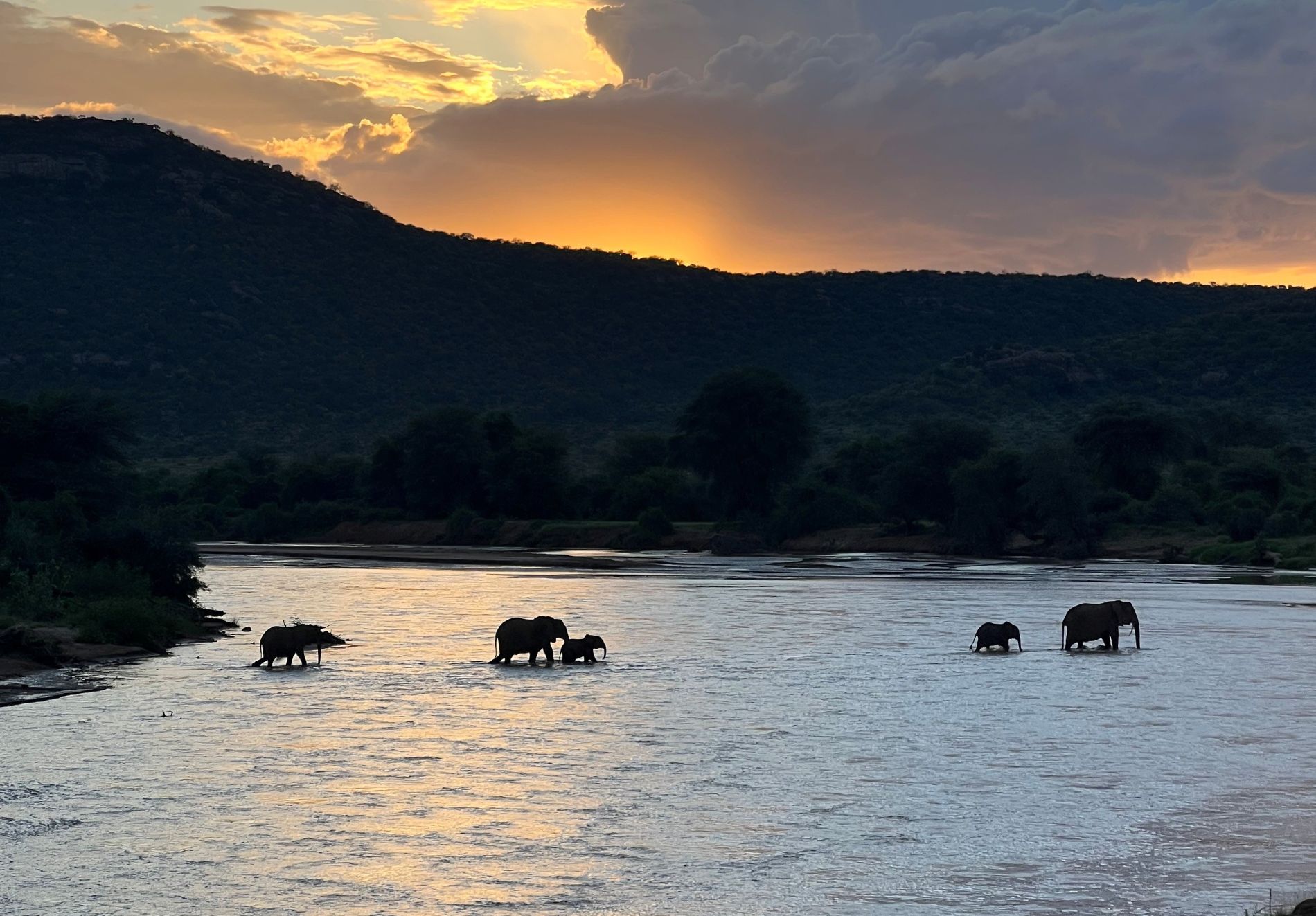
An elephant family crosses the Ewaso Nyiro River in Samburu National Reserve, Kenya as the Sun sets. (Photo/ George Wittemyer)
What actions can individuals living far away from elephant habitats take to support their conservation and long-term survival?
Tourism has been the lynch pin to protecting Africa’s wildlife and it remains as such. So thinking about a trip to Africa to see elephants on the ground is actually a form of supporting their conservation. But also, supporting on the ground, non-profit organizations like Save the Elephants is critical to protecting elephants. Save the Elephants operates and supports elephant conservation across the continent in remote areas that are inaccessible to tourists and therefore unlikely to be sustained by tourism revenue. Those areas can only be helped by investment, much of which comes from donations from the wealthier citizens of the world.
As we celebrate his life and work with the upcoming screening of "A Life Among Elephants," how does Dr. Douglas-Hamilton's legacy continue to shape the future of elephant conservation and research in Africa and around the world?
Dr. Douglas-Hamilton was the first scientist to study elephant behavior in the wild and brought to the world the intricate social lives of elephants. We continue efforts to uncover the richness of elephant social behavior, building off the foundational work Iain conducted. Following that groundbreaking work, Iain spear headed a global effort to end the ivory trade, which was decimating elephant populations in the 60-70s. He did this not only through advocacy and policy development, but actively counted elephant populations across Africa. Like his behavioral work, these surveys serve as the foundation for our assessments of elephant populations as we go forward with continued monitoring and survey.
Come Explore the Fascinating World of Elephants!
To discover more, please join us on Jan. 15 for the special screening of “A Life Among Elephants” and panel discussion at the Denver Museum of Nature & Science. And don't miss "The Secret World of Elephants" at the Denver Museum of Nature & Science, closing soon on Jan. 25, 2026, which explores the evolution and biology of elephants and their connections and representations in human cultures.
Read more: When Elephants Ruled Colorado


