CATALYST
DENVER MUSEUM OF NATURE & SCIENCE ONLINE MAGAZINE
Guest Curators Enrich Indigenous Textile Installations
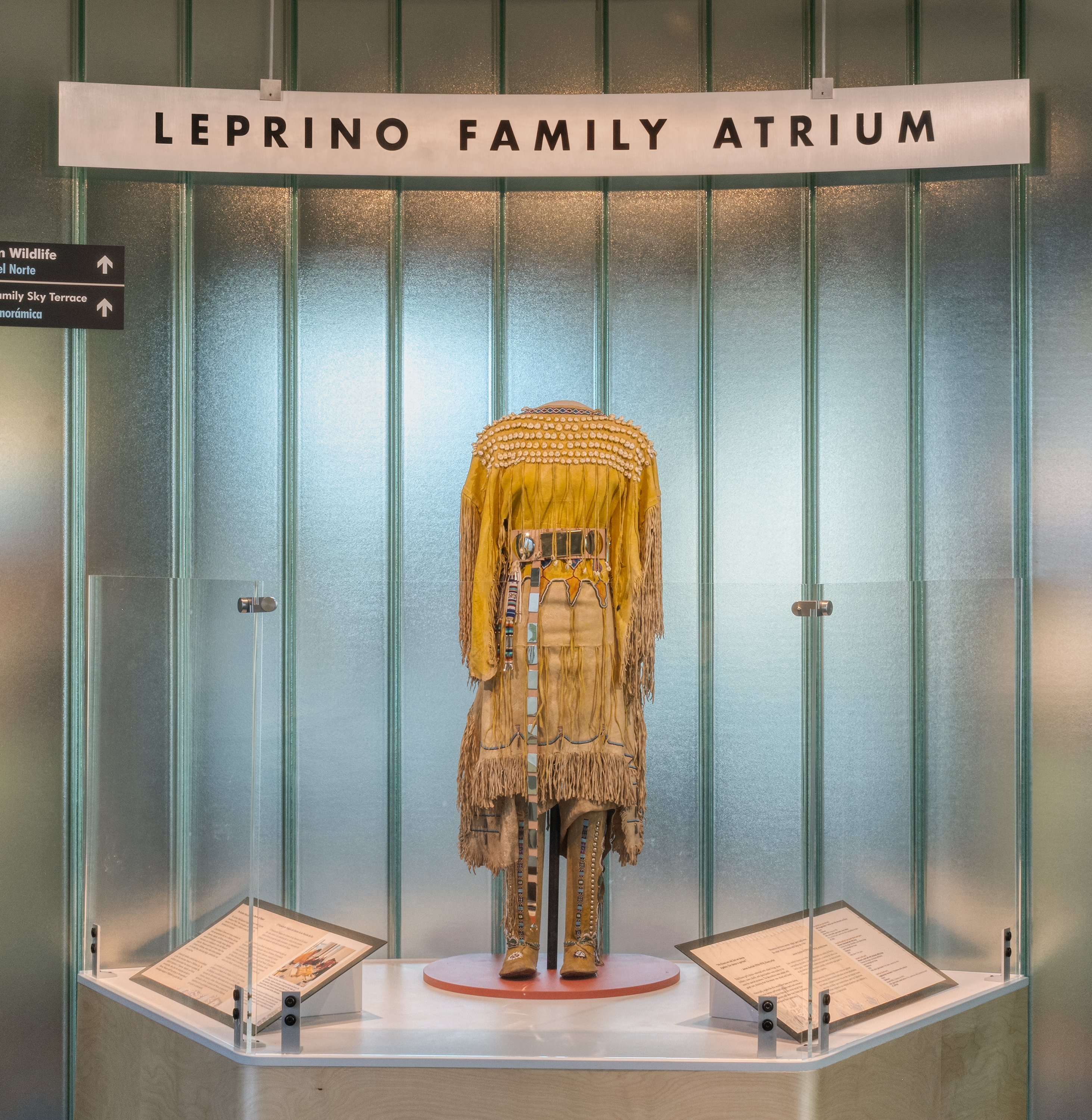
This Kiowa dress will be displayed at the Museum through June (Photo/Rick Wicker)
One of the most rewarding parts about working at the Denver Museum of Nature & Science is the opportunity to collaborate across departments and with community partners to create meaningful exhibitions. In a series of recent installations, two Indigenous guest curators selected dresses from the Museum’s Anthropology research collections for exhibition in a new display space on the second floor. Their expertise informed everything about these displays—from selected accessories to exhibit labels.
Lynda Teller Pete is a fifth-generation Diné weaver, teacher, scholar and advisor to the Denver Museum of Nature & Science. She co-authored the book, Navajo Textiles: The Crane Collection at the Denver Museum of Nature & Science in 2014. While surveying Diné textiles in the Museum’s collection for that publication, Teller-Pete encountered a biil’éé (two-panel dress) woven in the mid-to-late 1800s. Non-native dealers often separated these dresses to sell the front and back pieces individually. Often, the pieces are never reunited. Teller Pete is working to identify two-panel dresses in museum and university collections, advocating that they be sewn back together when possible. In this case, the front and back panels of this dress were stored in the same box, but they were not attached to each other. In a public event held at the Denver Museum of Nature & Science in 2024, Teller Pete and a conservator rejoined the dress—the first time a two-panel dress in a museum collection has been sewn back together.
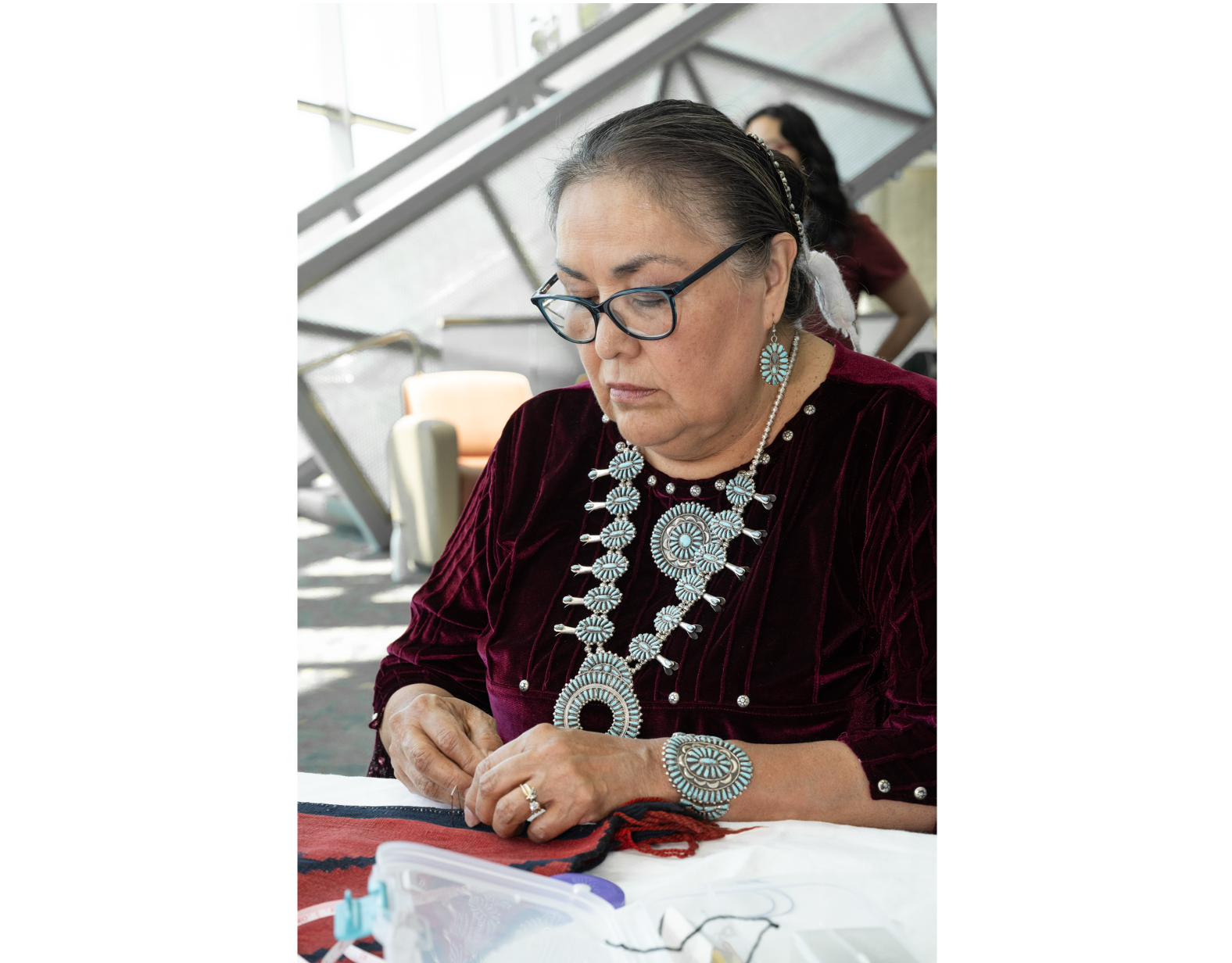
Lynda Teller Pete sewing together the front and back panels of the biil’éé (two-panel dress) (Photo/Rick Wicker)
Last summer, Teller Pete guest-curated the exhibition of this Diné dress at the Museum. She selected additional collection items to accompany the display: a woven sash belt, a silver squash blossom necklace and a pair of wrap-around boots. She also showed Avenir Conservation Center staff how to correctly gather the sash belt at the waist and how to properly wrap the boots. Additionally, she reflected on her decades-long career as a weaver and shared her perspective on the importance of rejoining this dress in a video interview, a clip of which accompanied the installation.
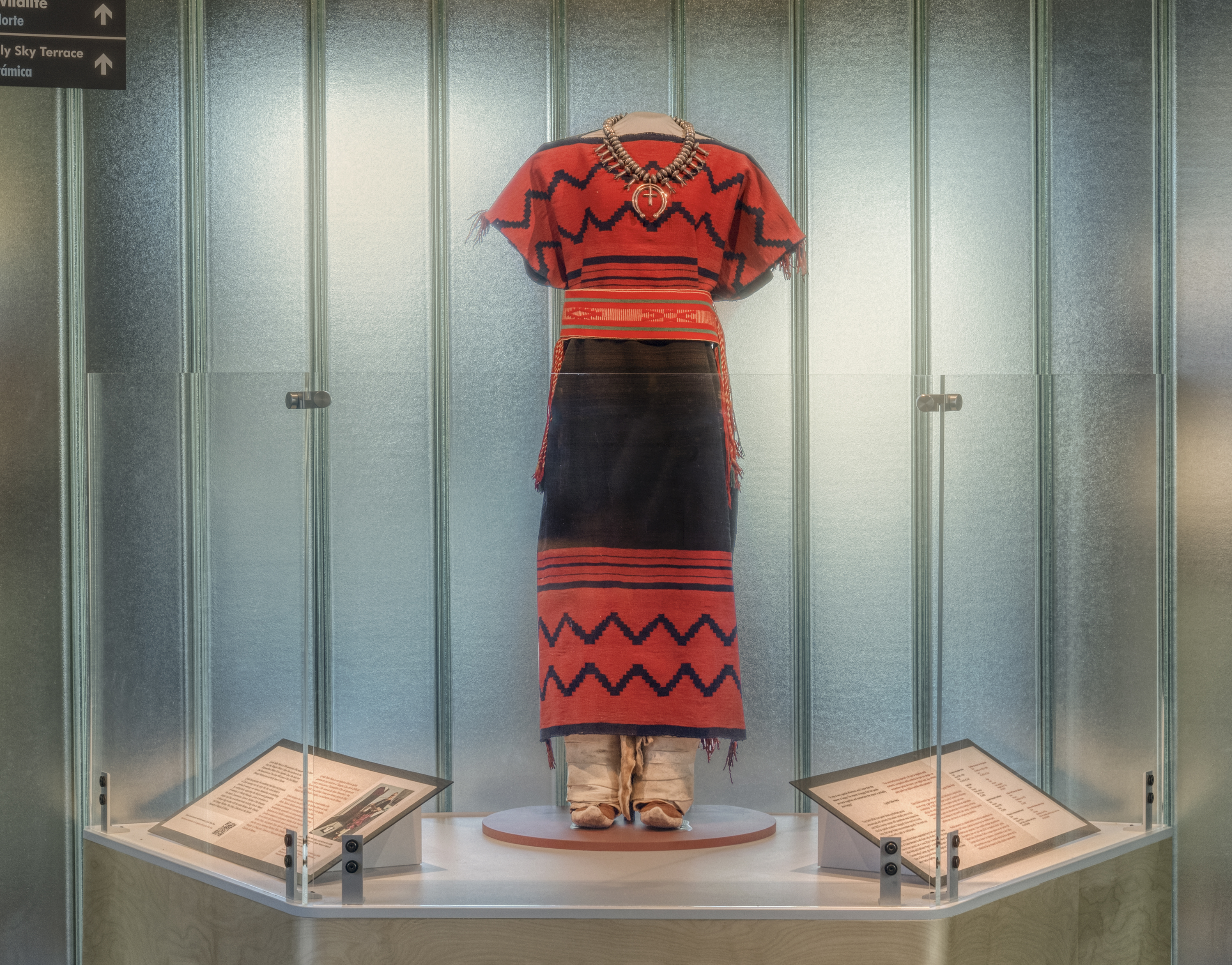
he Diné biil’éé (two-panel dress) on display at the Museum (Photo/Rick Wicker)
The Museum's Southern Plains Beadwork Project inspired the next installation in this display area. Launched in 2024 as a collaboration between the Denver Museum of Nature & Science, the Cheyenne, Arapaho and Kiowa Tribes of Oklahoma, Texas Tech University and the First Americans Museum in Oklahoma City, this project enables intergenerational knowledge- and expertise-sharing through community workshops and consultation. The project rethinks long-held museum practices that have made accessing beadwork in the Museum's collection difficult, especially for tribal members who live outside of Denver. Last year, Museum staff brought 45 belongings—including dresses, leggings, moccasins and cradleboards—from Colorado to Oklahoma. Tribal citizens examined and handled them, discussing design, construction and care practices. Some of these pieces were also displayed in an exhibition at the First Americans Museum.
Guest curator Amanda Hill, the Tribal Historic Preservation Officer for the Kiowa Tribe of Oklahoma, and a partner in the Southern Plains Beadwork Project, selected one of the dresses that had travelled to Oklahoma to be displayed here in Denver, along with a pair of beaded leggings. However, after reviewing a list of other accessories in the Museum’s collection, Hill determined that there wasn’t enough information about their provenance to ethically display them. Instead, she recommended that we commission a new set of the accessories—a belt with silver conchos and three beaded bags—that define Kiowa women’s dress. Kiowa artist Laura HuntingHorse made these pieces for the Museum and local Kiowa community member Cheryl Cozad guided Museum staff on how to properly dress the mannequin for display. Incorporating this contemporary knowledge of traditional forms of dress shows that these are living practices for Kiowa women today.
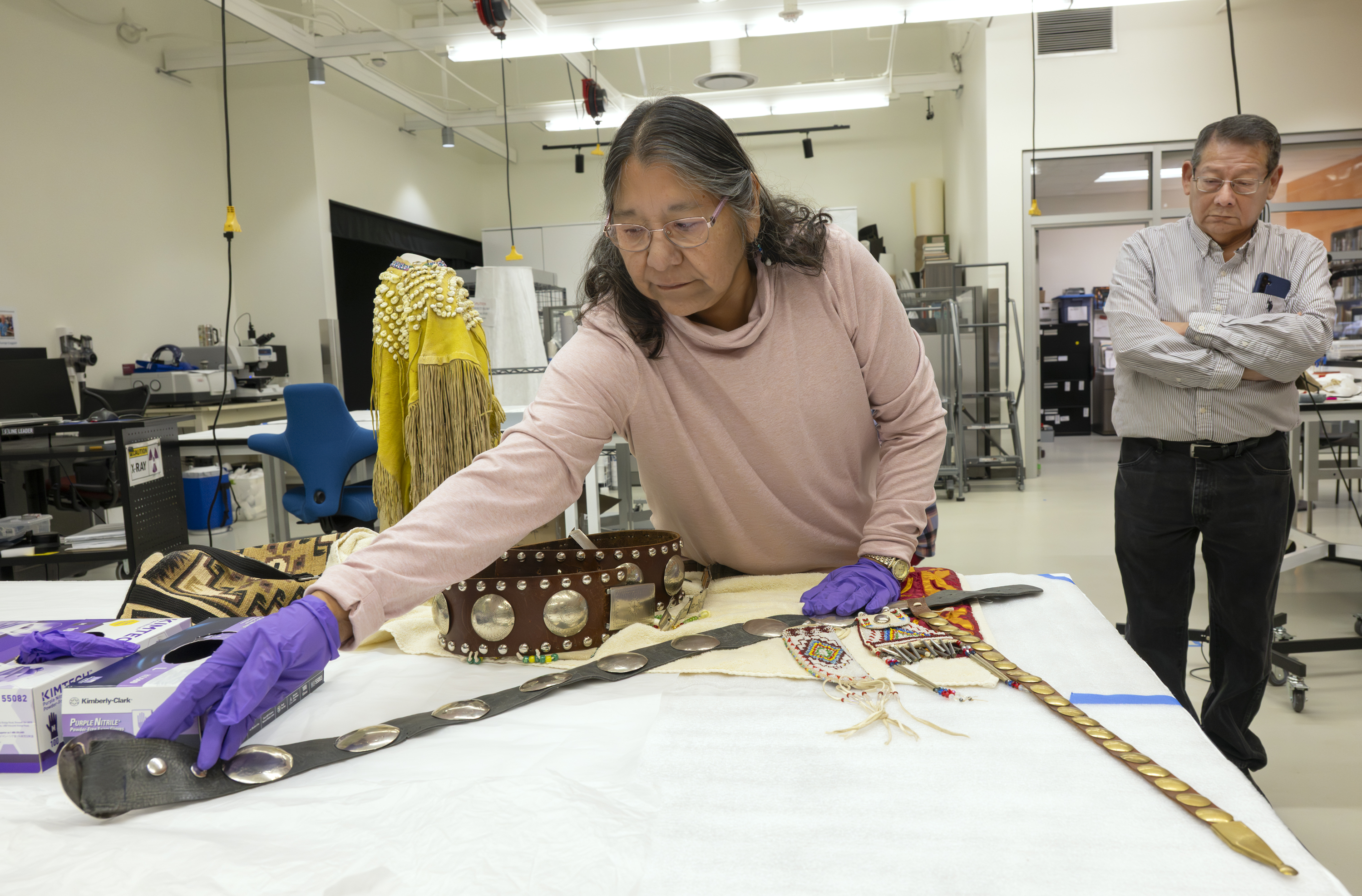
Cheryl Cozad demonstrates appropriate Kiowa accessories, including a concho belt with drag, a knife case, and a strike-a-light bag—as Andy Cozad looks on (Photo/Rick Wicker)
Spring 2026
In This Edition
-
Is That Fossil Real?
How We Forge Faux Fossils in Earth Sciences
-
A 1938 Time Capsule: Jarre Canyon Diorama
-
A New Approach to Deinstalling a Legacy Exhibition
-
When Triceratops Dreams Come True
-
Our Gems & Minerals Hall Will Be Completely Renovated, Expanded by 50%
The Dea Family Gems & Minerals Hall: Unveiling Late 2027
-
2026 Symposium Tackles the Role of Politics & Policy in Science
-
Guest Curators Enrich Indigenous Textile Installations
Share this: