
CATALYST
DENVER MUSEUM OF NATURE & SCIENCE ONLINE MAGAZINE
Colorado Fossil Revealed as Missing Counterpart to Specimen Collected Nearly 120 Years Ago
By Sadie Sherman and Franklin Duffy
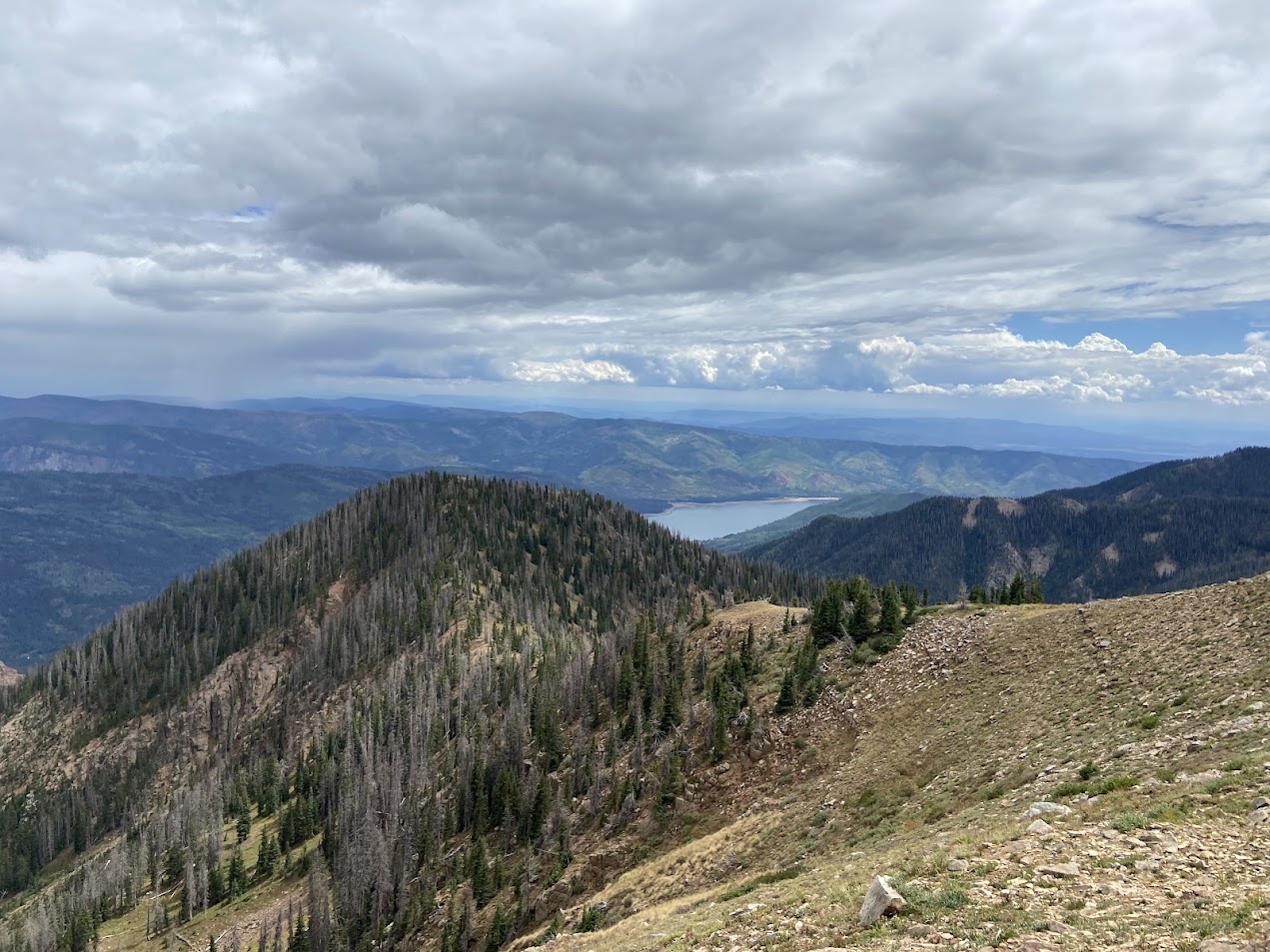
View from the Devon Point fossil locality overlooking Vallecito Valley. (Photo/Sadie Sherman)
Hidden high in the peaks of the Rocky Mountains are the remnants of a vast shallow sea that existed approximately 375 million years ago during the Late Devonian Period. This ancient seabed was once buried deep underground, until tectonic forces in Earth's crust pushed the Rocky Mountains upward, and in the process exposed these long-buried Devonian strata.
Among these rock layers are the Late Devonian Parting Formation and its stratigraphic equivalent, the Elbert Formation. Preserved at elevations of up to 12,000 feet, these formations record one of the greatest transitions vertebrates have ever made—the transition from sea to land.
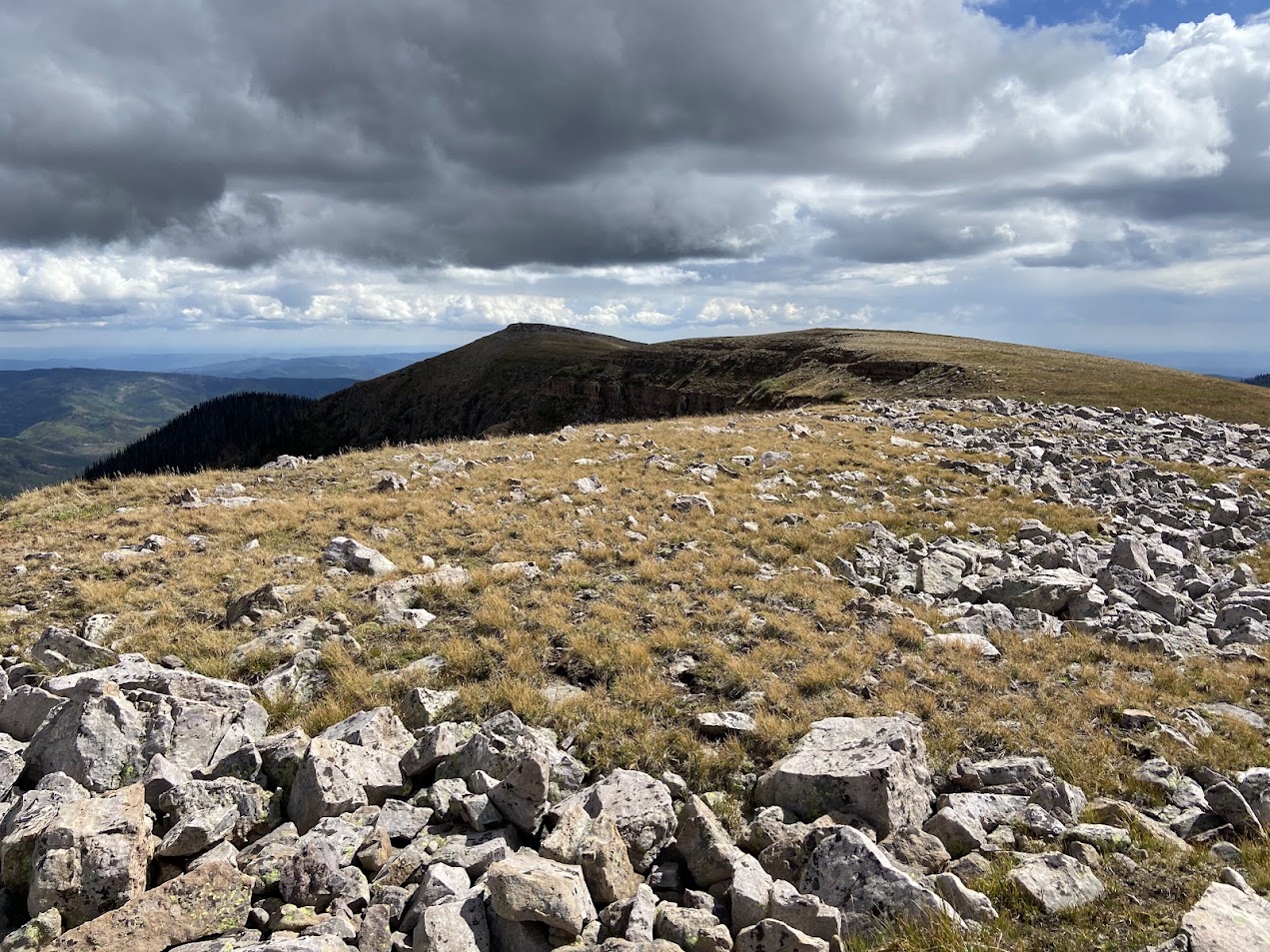
Devon Point fossil locality near Durango, CO. (Photo/Sadie Sherman)
Every summer since 2023, paleontologists from the Denver Museum of Nature & Science and the University of Chicago have ventured into the mountains of western Colorado to search for the fossilized remains of stem tetrapods, the earliest land-curious ancestors of all terrestrial vertebrates alive today. Fossil stem tetrapods are critical to understanding the sea-to-land transition because their anatomy documents the journey from fully aquatic life through a semi-aquatic stage toward eventually becoming completely terrestrial.
But the stem tetrapod fossils that shape our understanding of this transition have been collected and sampled in far greater numbers from Europe and eastern North America. This leaves a significant gap in our understanding of what happened during the transition in western North America. Our work in Colorado is helping to fill that gap.
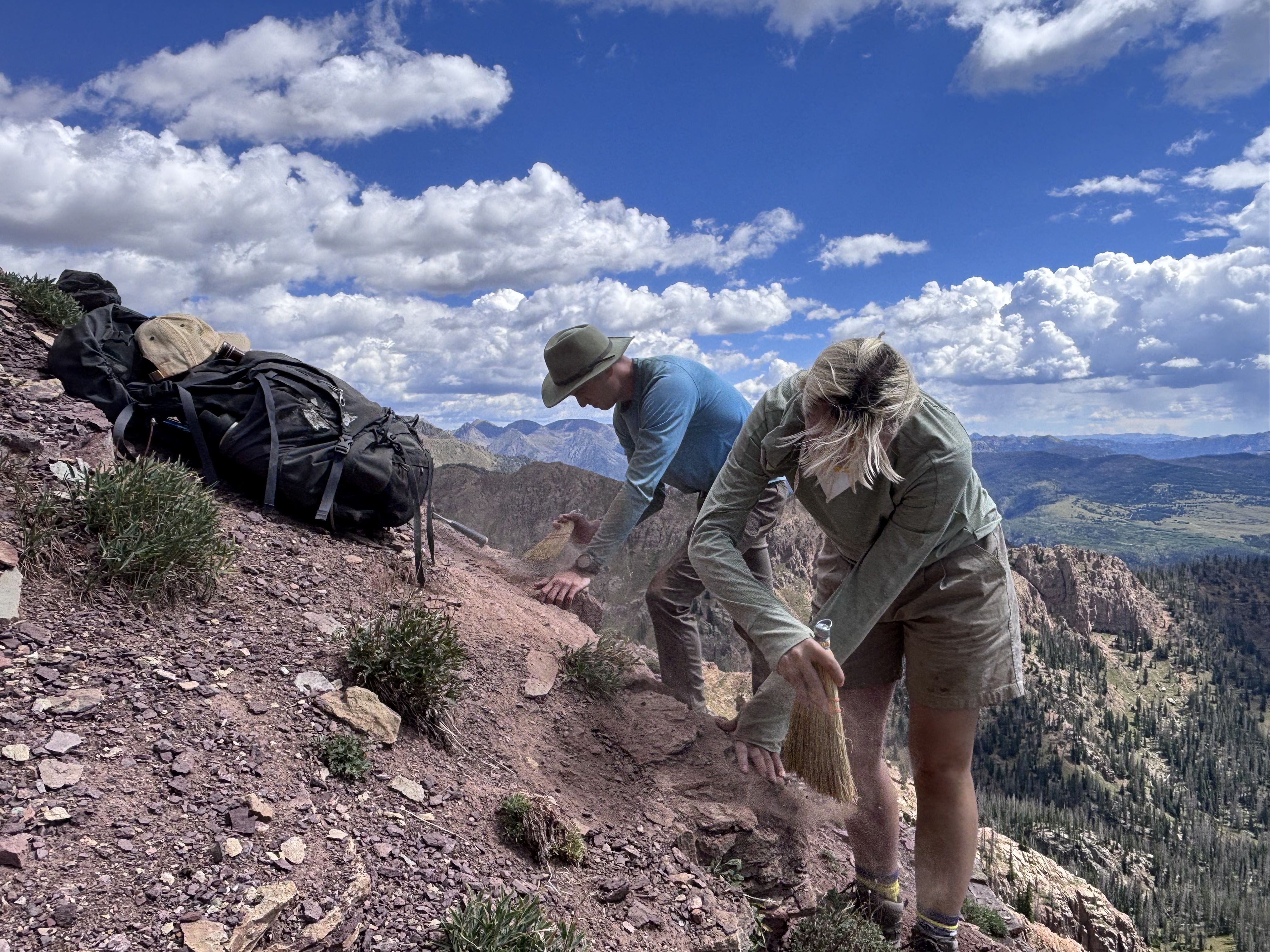
University of Chicago PhD candidate, Franklin Duffy (former digital preparator at DMNS 2022-2024; left), and Denver Museum of Nature & Science fossil preparator, Sadie Sherman (right), exposing Devonian fish fossil at Endlich Mesa. (Photo/Laurel Trout)
Our team is not the first to discover prehistoric fish fossils in the Rocky Mountains. Beginning in the late 19th century, the United States government dispatched geologists as part of a series of surveys aimed at better understanding the natural resources of what would soon become the state of Colorado. Geology was a central focus of these surveys, particularly as gold mining—and later silver mining—drove growing interest in Colorado’s mineral resources. These early geologists documented the geology of the Rockies, including the Devonian-aged Elbert Formation in the Vallecito Valley.
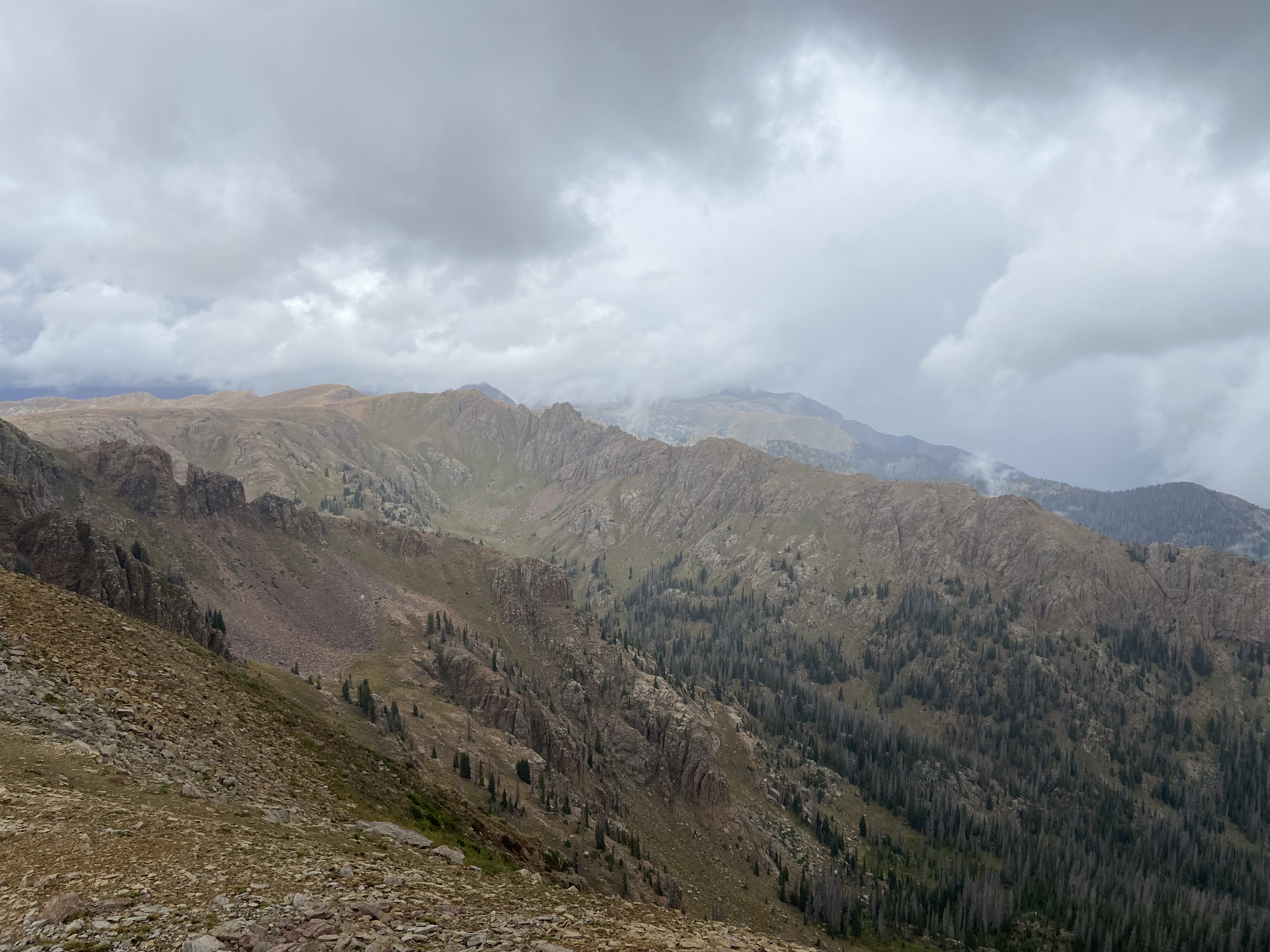
Devon Point fossil locality near Durango, CO. (Photo/Sadie Sherman)
The first fish fossils in Vallecito were discovered in the summer of 1874 by Fredric Endlich, a geologist working for the Hayden Survey. Endlich’s main collection area was a locality on Endlich Mesa overlooking the Vallecito Valley, dubbed “Devon Point” by his contemporary Dr. Whitman Cross. Cross later documented Devon Point in his writings and collected fossils from the area, including part of a fossil now housed in the collections of the Smithsonian National Museum of Natural History in Washington, D.C. But the exact location of this locality had been lost to the sands of time.
These early expeditions gave our team a starting point, but no one had revisited these localities in decades, and the original pre-GPS notes could place sites only within one-square-mile survey sections. Finding fossils a few inches long in a square mile is like finding a needle in a haystack.
Then, in August 2026, our team made a remarkable find. During our annual expedition to Durango in search of stem tetrapod fossils, we uncovered a remarkably complete wing-like pectoral fin from the ancient armored fish Bothriolepis coloradensis. Not only was this an exciting find on its own, but incredibly, we had found the missing counterpart to the fossil collected by Dr. Cross more than 120 years earlier. This also meant we had solved the case of the missing Devon Point locality.
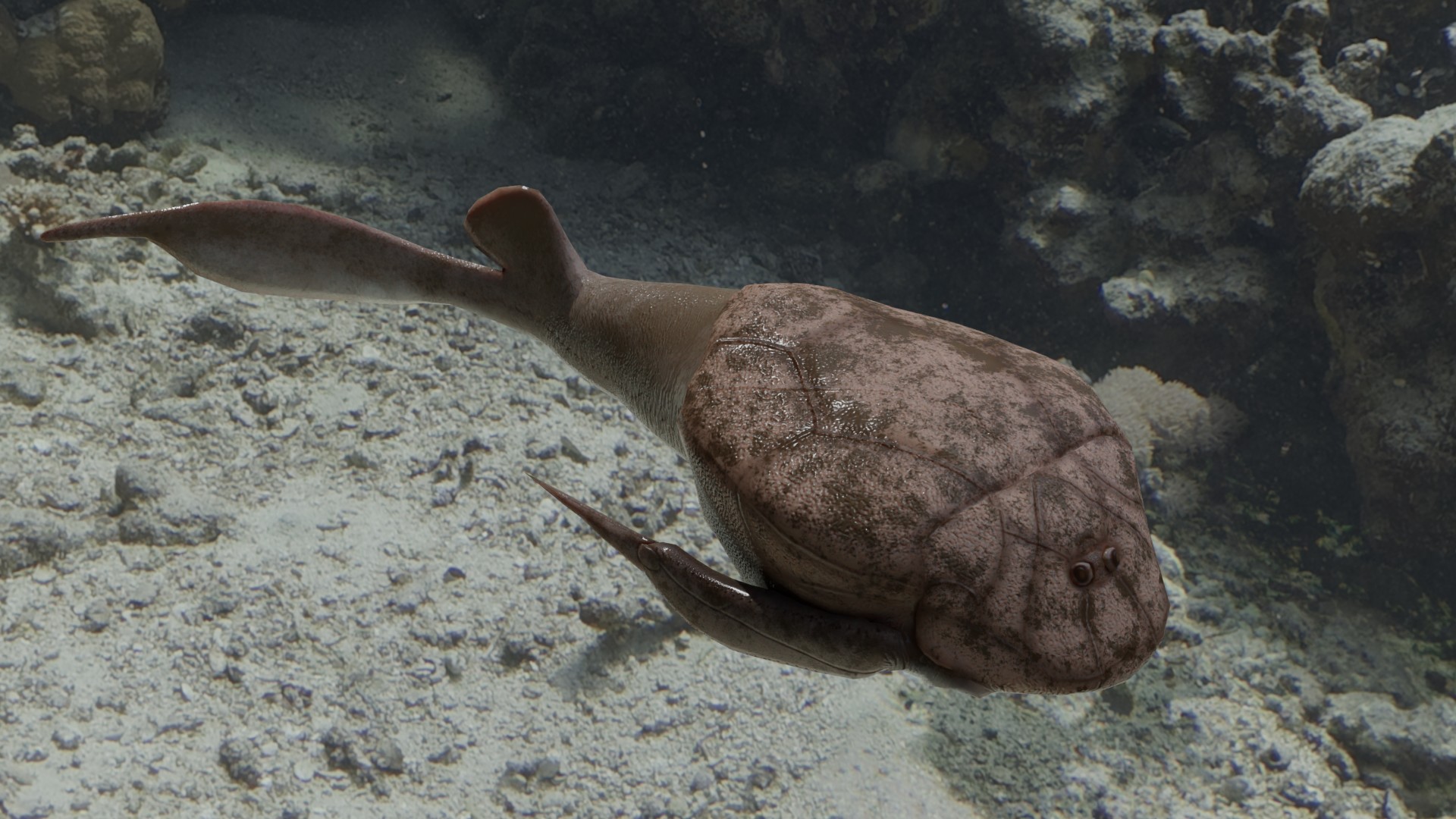
Life reconstruction of Bothriolepis canadensis, a close relative of Bothriolepis coloradensis that likely looked similar. (Photo/PaleoBiome)
The Smithsonian’s Bothriolepis coloradensis fin, the matching counterpart slab to our own, was described in 1904, making it a hypotype specimen for the species (a later-described fossil used to add detail to our understanding of the species). Because the fin of the holotype (the specimen that defines the species) is poorly preserved, this hypotype has served as the best reference for the fin anatomy of this species.
Now, more than 120 years later, the specimen is finally complete again with the addition of our newly discovered half, which preserves much more of the pectoral fin. Better still, the metadata for the Smithsonian’s specimen shows that the original fossil was found at the historic Devon Point locality. Finding its counterpart confirmed that one of our two Endlich Mesa localities was indeed the long-lost Devon Point originally named by Dr. Cross.
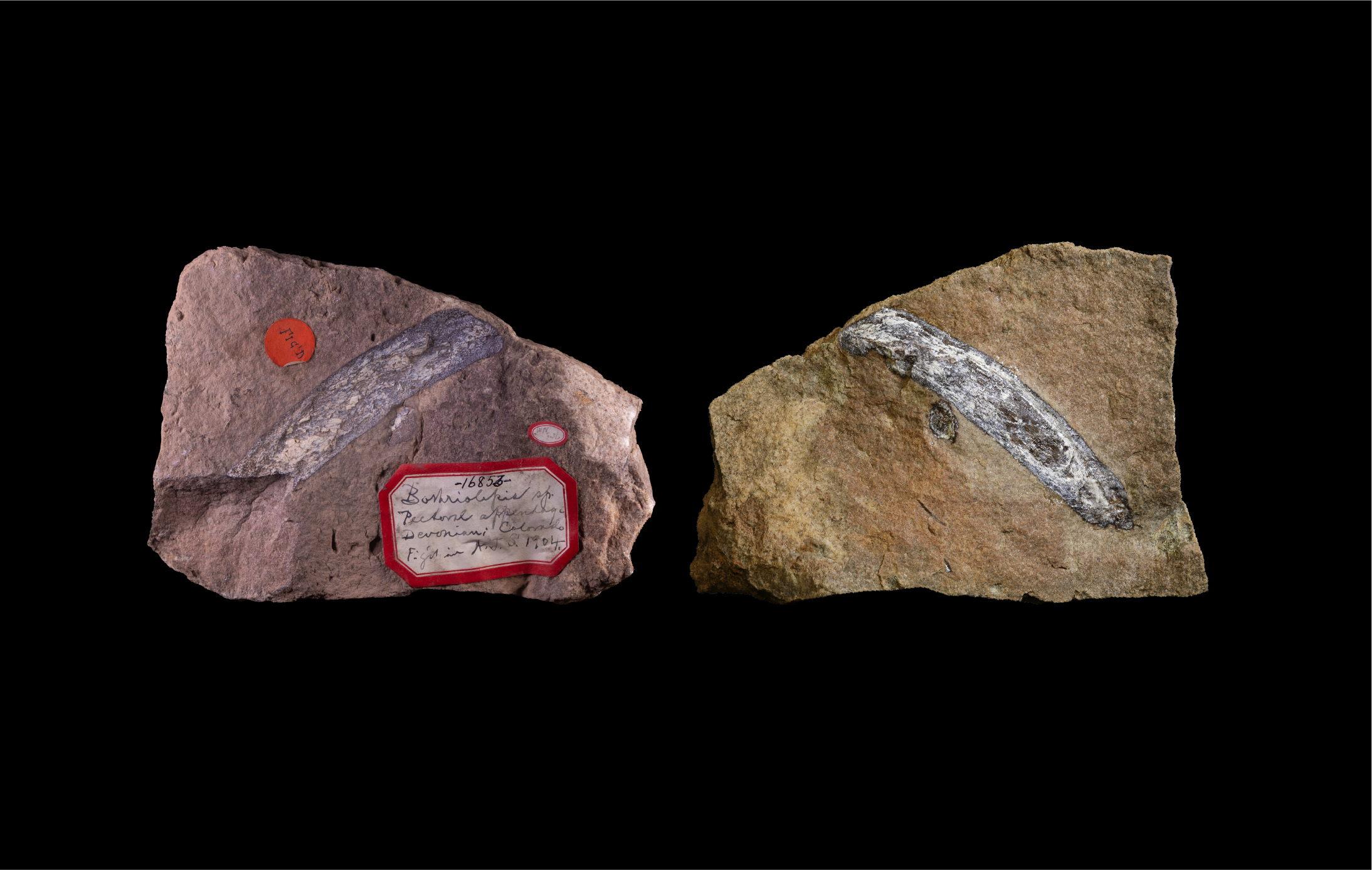
Pectoral fin of Bothriolepis coloradensis, with the Smithsonian specimen (left) described in 1904 and the Denver Museum of Nature & Science counterpart (right) found in 2026. (Photo/Franklin Duffy and Laurel Trout)
Historic paleontological sites near Durango and Gunnison, like Devon Point, have yielded some of the best-known fossils from this pivotal time in vertebrate evolution. Thanks to the careful notes of geologists and paleontologists, and the collections managers who preserved their specimens and records for more than a century, we can now return to places once thought lost to uncover more clues about a transition that set the stage for all terrestrial vertebrates, including us.


