CATALYST
DENVER MUSEUM OF NATURE & SCIENCE ONLINE MAGAZINE
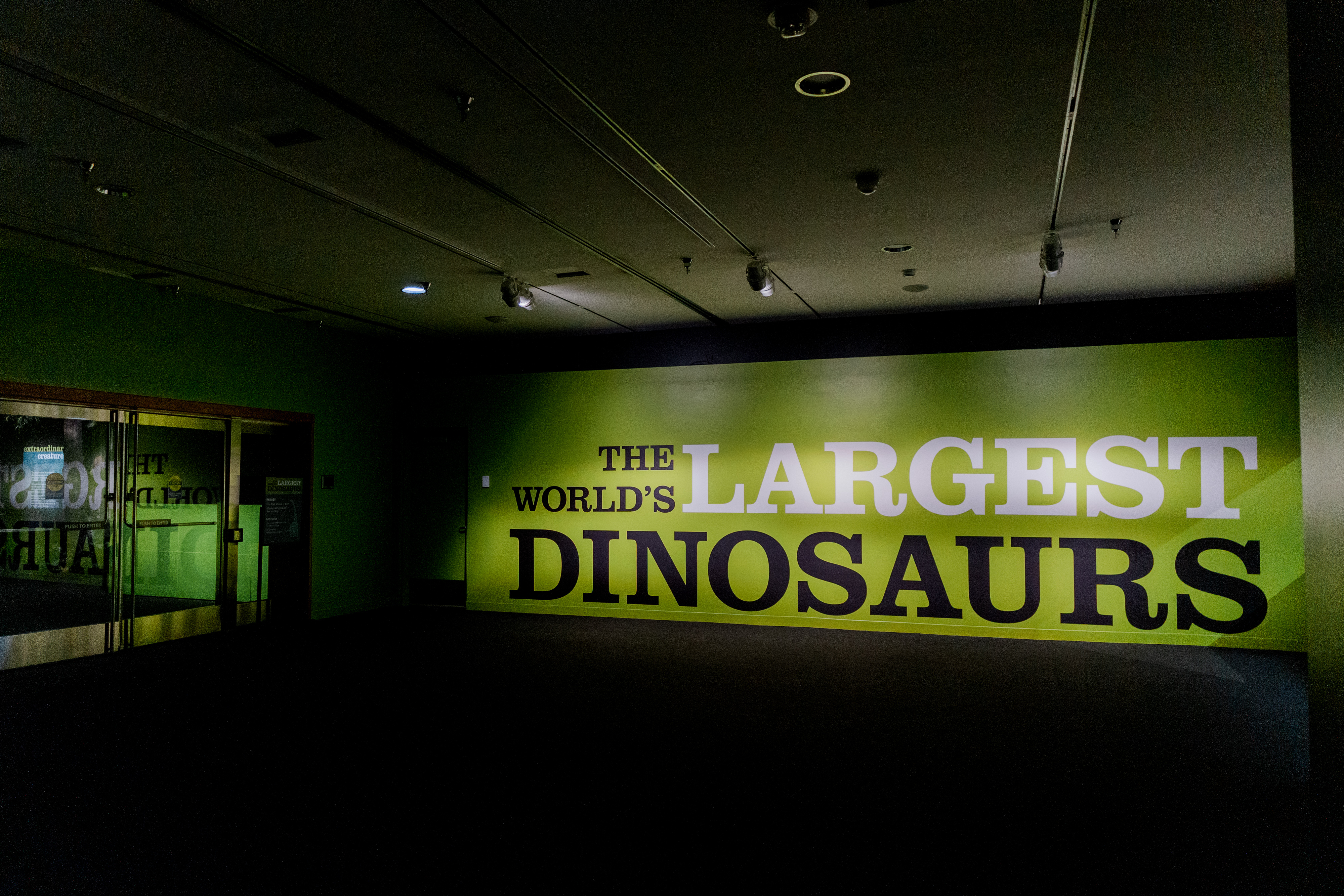
The World’s Largest Dinosaurs is organized by the American Museum of Natural History, New York (amnh.org).
Dinosaurs Aren't Finished
Yes, they’re extinct. But they aren’t…done. More accurately, we’re not done with them.
Catalyst had a chance to sit down with Dr. Patrick O’Connor, Director of Earth and Space Sciences at the Denver Museum of Nature & Science to talk dinosaurs and what we don’t know about them.
Catalyst: We recently explored The World’s Largest Dinosaurs, which is at the Museum through September 7 and features giant sauropod dinosaurs. We understand you’re considered an expert on them. In fact, weren’t you part of teams that have discovered and named new species?
Dr. O’Connor: Well, I’d say my general area of expertise is in vertebrate paleontology and sauropods are definitely a group in which I have experience. And yes, I have been fortunate to discover and describe several new sauropods to date. For example, the titanosaurian sauropods Rukwatitan bisepultus and Shingopana songwensis in Tanzania. These represent some of the newer titanosaurians recovered from continental Africa over the past 10-15 years, compared to well over 30 from South America during this span. In some ways, these discoveries help to fill a gap or “black hole” in the fossil record.
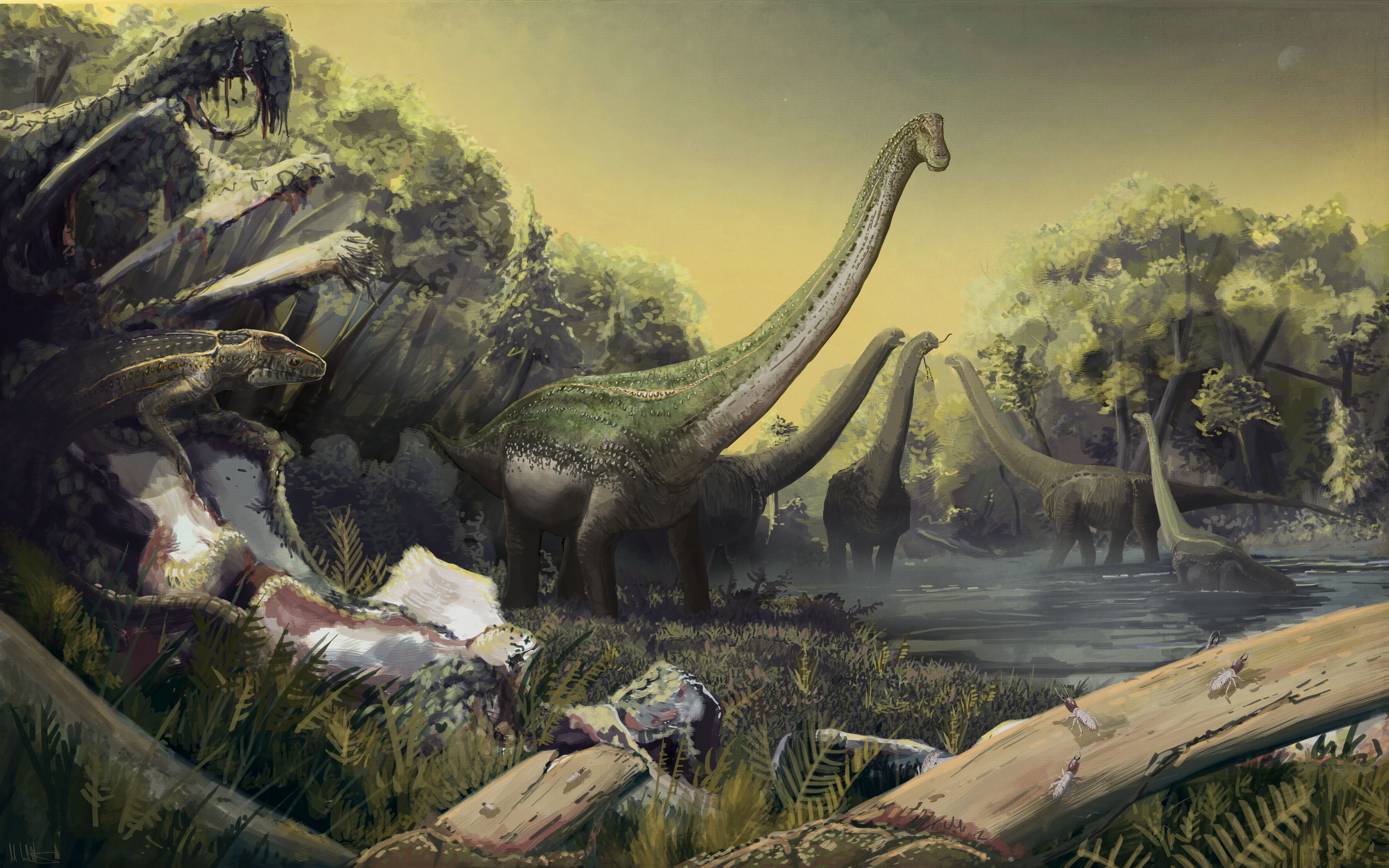
The titanosaurian sauropod, Shingopana songwensis, from eastern Africa © Witton 2017, courtesy of Dr. Patrick O’Connor.
Catalyst: A black hole? Don’t we know everything about dinosaurs?
Dr. O’Connor: What I like to say is, 'we know about the things where we know about the things'. For example, it used to be that our sauropod knowledge came from a handful of places like North America, including right here in Colorado. But scientists wanted to understand if what we saw in this part of the world represented what was happening to the animals, plants and ecosystems globally at the time these dinosaurs existed. Beginning in the 1990s and early 2000s, scientists began a push into other regions of the planet that had seen relatively less exploration such as Madagascar. The animals we began to find there looked different from those we’d discovered in the U.S., although they were similar to some known from South America.
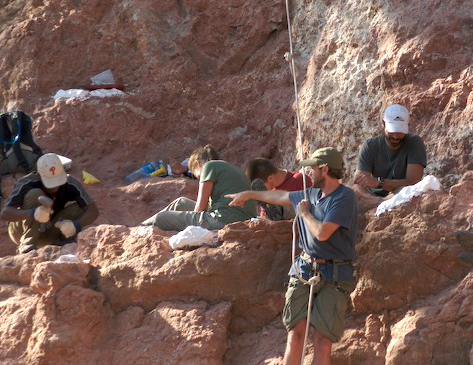
Dr. Patrick O’Connor and colleagues excavating the sauropod dinosaur, Mnyamawamtuka, out of a cliff surface in Tanzania, 2007.
Also, we didn’t have comparable time periods represented in our fossil database from places like the continent of Africa or India or Antarctica. You can’t say something is a global phenomenon, for example like the extinction of non-avian dinosaurs at the end of the Cretaceous Period, when it’s based on limited data from only one or two regions. So this set many of us on journeys to other parts of the planet.
Catalyst: It must be exciting to think you’ve uncovered a pattern and then have that validated, right?
Dr. O’Connor: It’s definitely interesting. What I’ve learned from working in Antarctica, Madagascar and Tanzania, places that have seen relatively little exploration or published research, is that you have a general idea of what you expect to find. But then you dig up what we jokingly refer to as a fossil that rewrites textbooks.
Catalyst: Wow, like what?
Dr. O’Connor: A small crocodile that lived on land and had teeth that looked like those of a mammal. Cretaceous-age birds with great big beaks that had teeth just at the tip. Species that complicated the story instead of confirming it. The deeper we looked, both literally and figuratively, the more we could see how much we didn’t know. Not just about these unexpected finds, but about the species we’ve been studying for decades. We’d be on a dig and see a slightly different age of rock or maybe a little different environment preserved in the rock record because you might get things that lived in a desert, things that lived in a forest or things that lived in quiet ponds. The takeaway here is that we've only scratched the surface of understanding the history of life on the planet.
Catalyst: Even with sauropods?
Dr. O’Connor: Museums have this unbelievable record of life on the planet. What most people don’t realize is that it’s easier to collect things than it is to do the science on them. Some of the sauropod fossils on display at the Denver Museum of Nature & Science haven’t undergone a full scientific study. That takes time. Think of science like the fossil record. It’s a snapshot of what we know right now. That's why we have so many opportunities to do new science and to train new scientists right here at DMNS.
Catalyst: And that snapshot keeps growing. So kids today know more about dinosaurs than most adults?
Dr. O’Connor: Obviously. But you don’t need a scientist to tell you that. Kidding aside, scientists and kids have something in common. We like to ask questions. Sauropods were the largest land animals to walk the planet. How did they move? Breathe? How did blood pump all the way up that long neck to the brain? The size of these creatures is astounding, and with that size comes a series of physiological problems they clearly had to have solved since they thrived for over 140 million years.
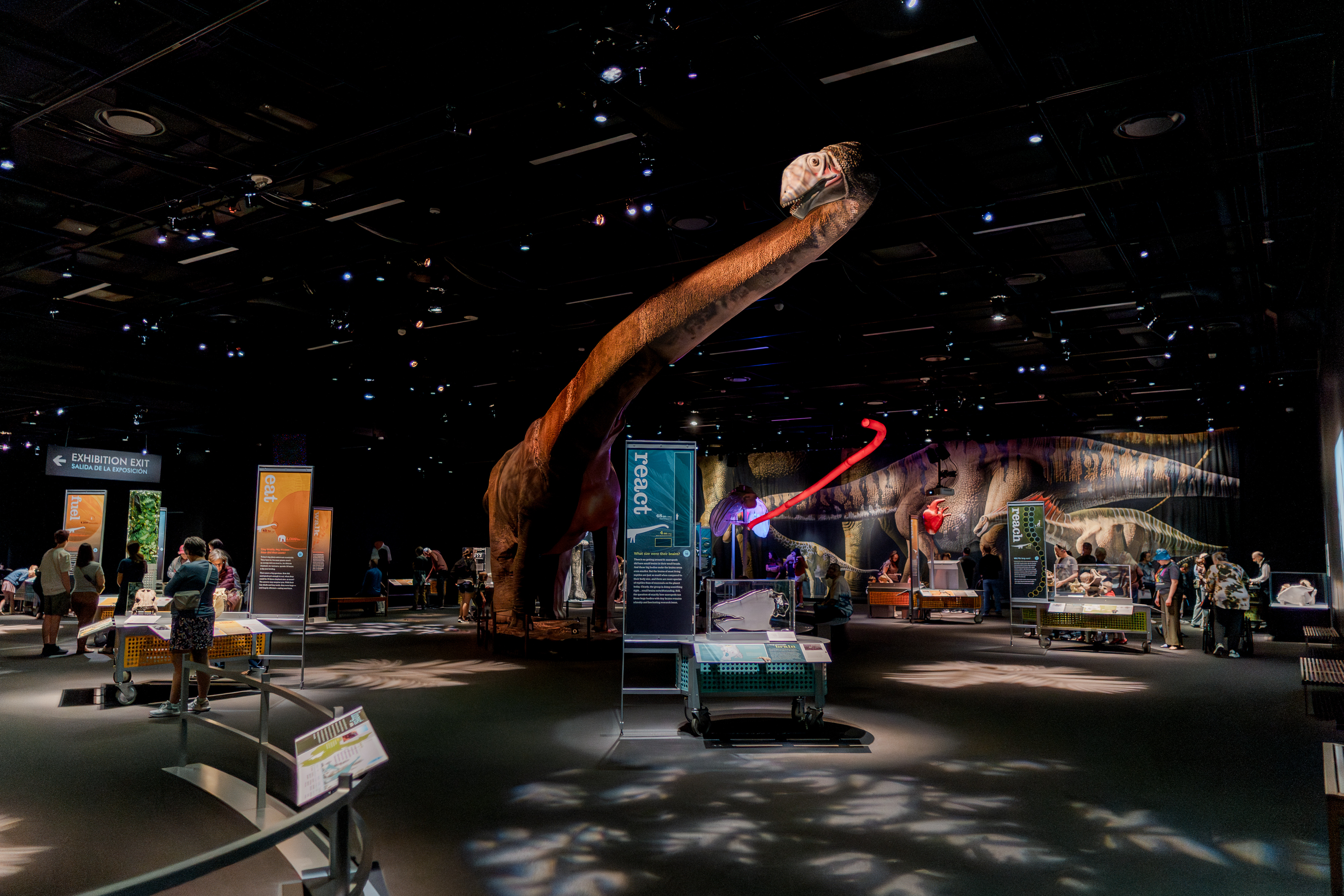
From eating and breathing to reproducing, size affects almost everything an animal does. Through imaginative exhibits and displays, including a towering, life-siz model of a 60-foot-long Mamenchisaurus, go beyond the bones and into their bodies to discover the fascinating mechanics behind how these titans lived their lives on Earth millions of years ago.
Do we know exactly the physiology of their blood flow? No, but we can look at examples from our world now to better understand their biology. That’s why there’s a giraffe in this exhibit. The neck isn't as long and it’s a mammal, not a reptile. But what can we learn about how animals work today and how can we apply this knowledge to the biology of dinosaurs? That's truly what this exhibit is about.
Catalyst: You must get told all the time that your job is very cool. What would you say is the most exciting thing you do?
Dr. O'Connor: I tend to say this to my colleagues and students…can you believe we get to do what we do? I mean, we’re getting a chance to understand the history of life on the planet. And to do so on virtually every continent. But to answer your question more directly, I’d say it’s working with people from around the world, hands down. Science opens the door, right? It lets you work with and learn from people everywhere – about their history, culture, language – all while in pursuit of science. Even though we may be from different places, we’re all asking the same questions. What? How? Why? Science can and should be the best translator and cultural connector of all time.
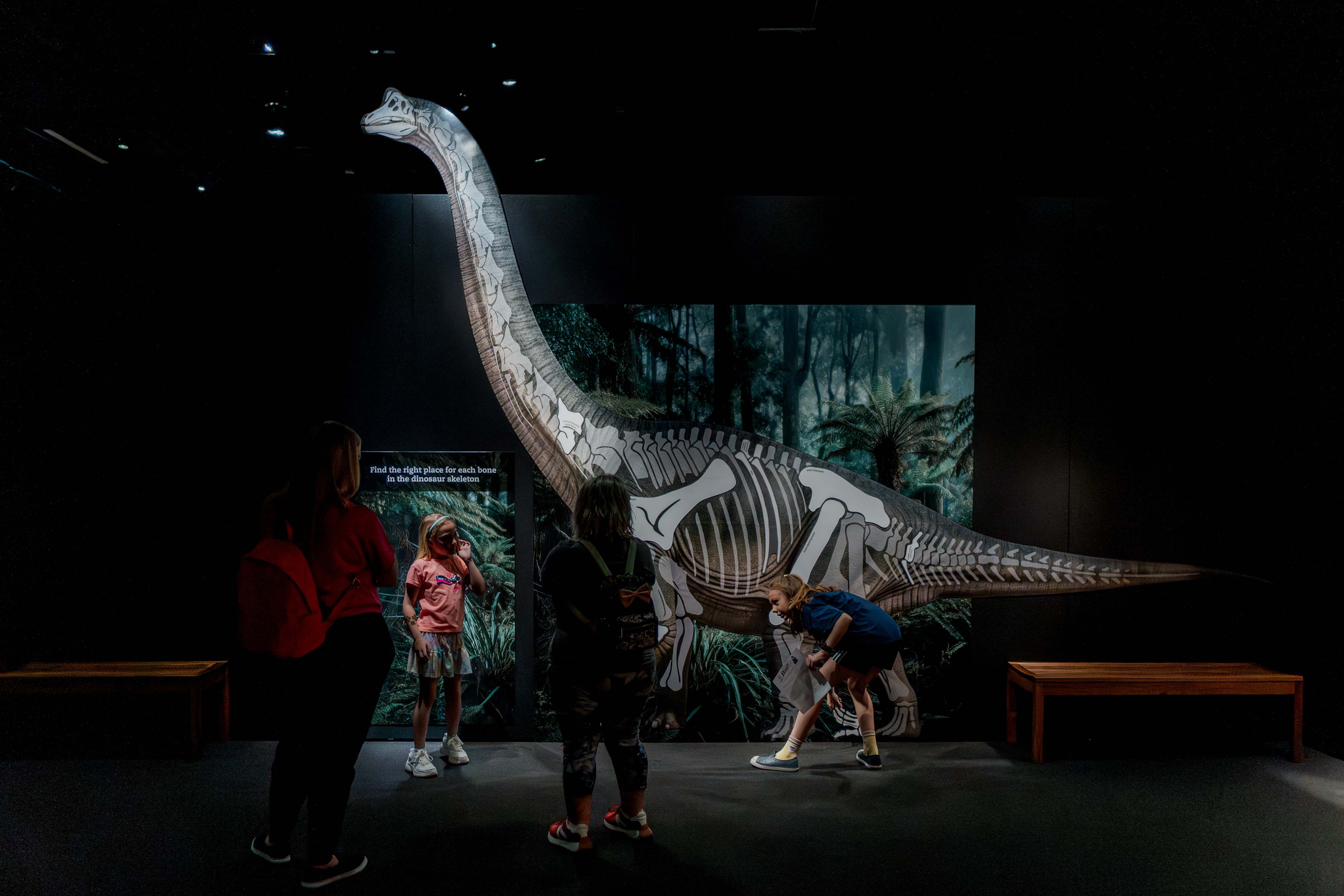
The World's Largest Dinosaurs is organized by the American Museum of Natural History, New York (amnh.org).
Catalyst: Speaking of why, why is this exhibition such a fan favorite?
Dr. O’Connor: Well, as I see it, one of the main objectives of a museum is to get you thinking, to make you curious. I always say, ‘if people are asking more questions when they walk out than when they came in, we did our job as a museum.’ Sure, you’re learning many different things as you explore the fossils in Prehistoric Journey for example, but what questions come up for you from that experience? The World’s Largest Dinosaurs is no different. It’s an exhibition that’s getting people to stop and think about their own biology or physiology…or even that of their pet.
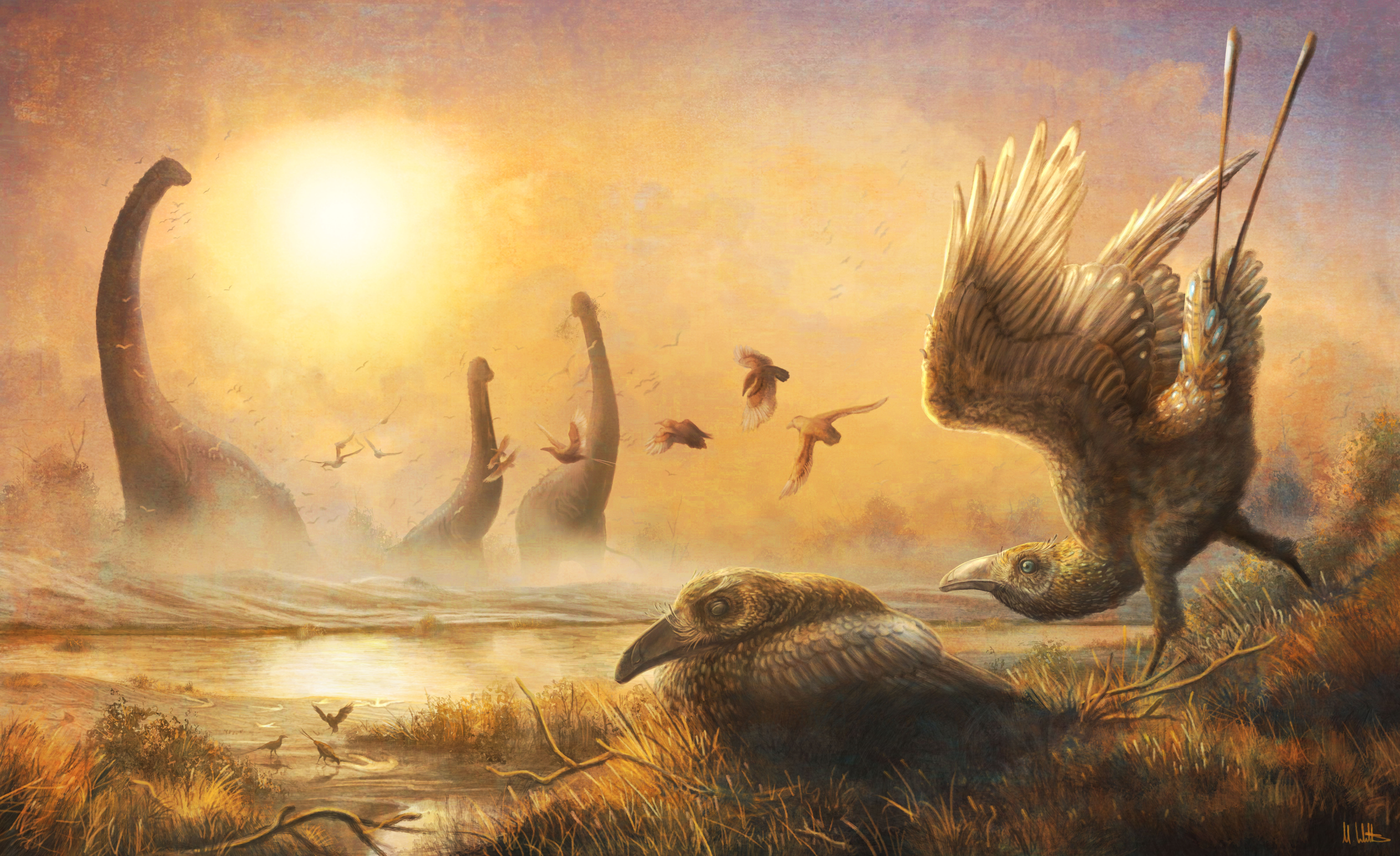
The bird-like dinosaur, Falcatakely, from the Late Cretaceous of Madagascar, with sauropod dinosaurs in the background. © Witton 2020, courtesy of Dr. Patrick O’Connor.
Catalyst: If you could have a pet dinosaur, which one would it be and why?
Dr. O’Connor: Great question. Probably one of the many small feathered dinosaurs, like Microraptor or Falcatakely, that I've studied while trying to understand the relationship between non-avian dinosaurs and modern birds. The emphasis is on small here. But very, very cool with feathers and teeth!


