CATALYST
DENVER MUSEUM OF NATURE & SCIENCE ONLINE MAGAZINE
When Elephants Ruled Colorado
The Story Behind One of the State’s Most Important Fossil Elephant Discoveries
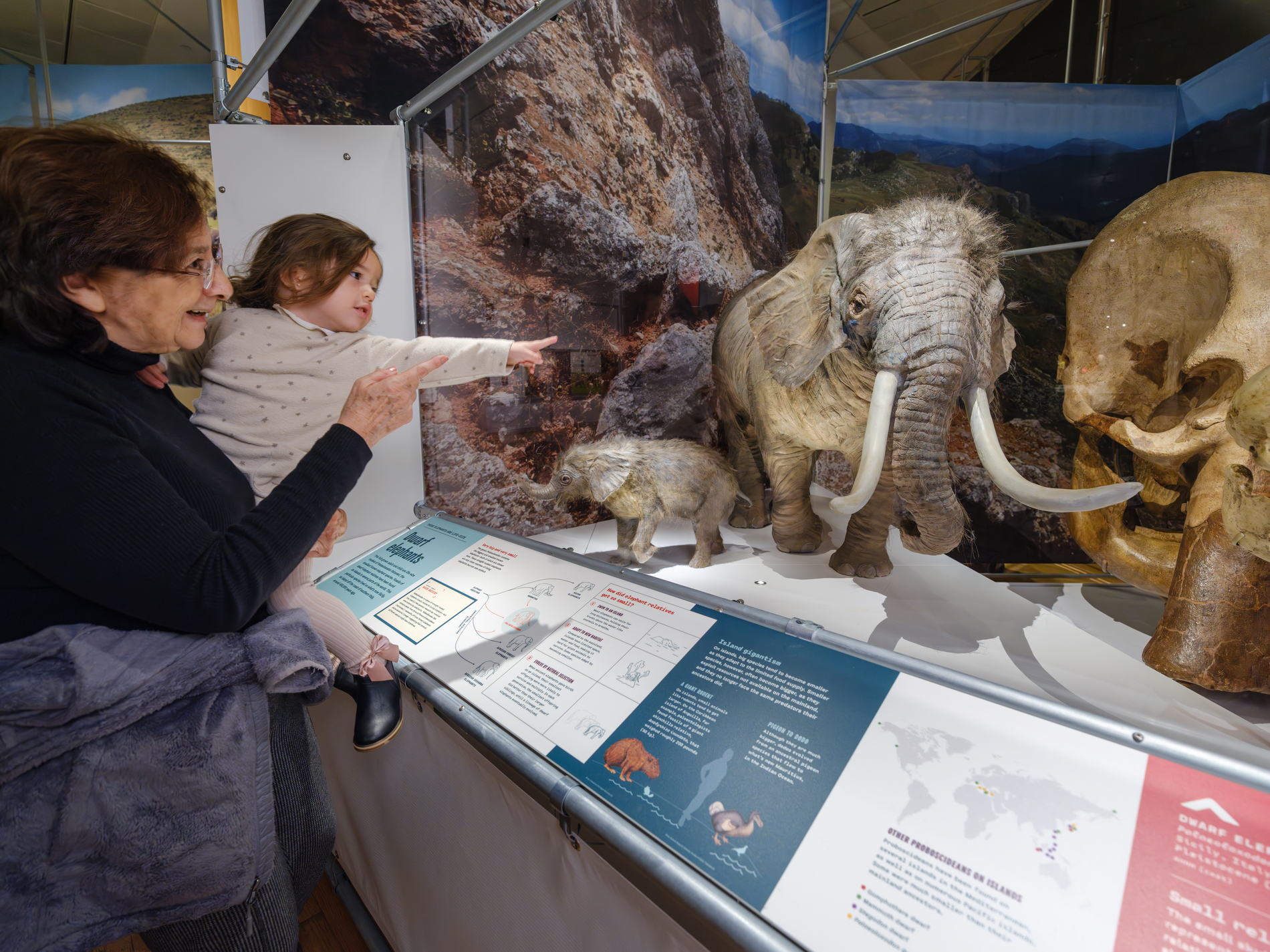
Now open in Denver, "The Secret World of Elephants" invites guests to explore the evolution of elephants. This is a dwarf elephant (Palaeoloxodon falconeri), an extinct species of proboscideans that lived in what is now Sicily, found in the exhibition. (Photo/ Alvaro Keding/© AMNH)
When I think about Colorado’s elephants, the first thing that comes to mind is not the gorgeous bachelor herd of Asian elephants at the Denver Zoo Conservation Alliance. As a paleontologist, I instead envision the long history of now extinct elephants that once roamed Colorado’s plains and mountains. I picture the American Mastodon (Mammut americanum), the Columbian Mammoth (Mammuthus columbi), and perhaps, even shovel-tusked gomphotheres (Amebelodon fricki).
Elephants and their not-so-distant relatives lived in Colorado for over 16 million years and as recently as 12-14,000 thousand years ago. We know of at least five Coloradan fossil proboscidean species, although new fossils are still being found every year and many species likely await discovery. Indeed, some of the first fossils acquired by our Museum were skeletons of mammoths and mastodons.
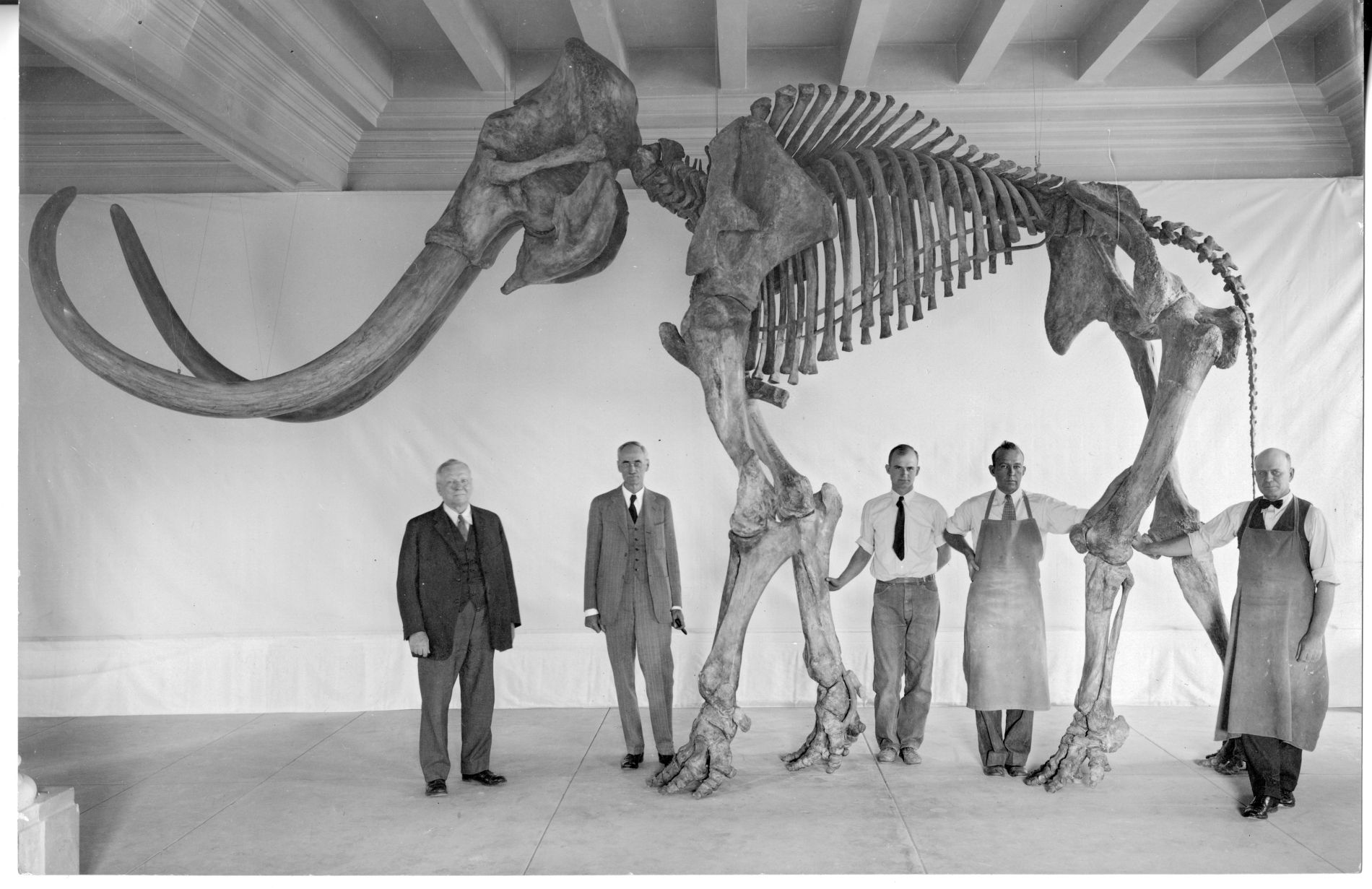
Imperial Mammoth (Archidiskodon) now known as Mammuthus columbi and staff in 1932. (Photo/ Denver Museum of Nature & Science)
My first encounter with fossil elephants came in the summer of 2011, when the Denver Museum of Nature & Science led its largest excavation to date in Snowmass Village, Colo. Within hours of graduating from Colorado College, I packed my car and drove to Snowmass to work as an intern for the summer — “Intern #9”, to be exact. The perfectly named “Snowmastodon Discovery” was not only a pivotal moment in my early career, but also a once-in-a-lifetime scientific discovery of, literally, mammoth proportions.
In October 2010, an excavator driver hit a mammoth tusk and the Museum was called in to survey the site, which was under construction to become the Ziegler Reservoir. The scientists uncovered a treasure trove of ice age fossil animals and Denver Museum of Nature & Science paleontologists, Dr. Kirk Johnson and Dr. Ian Miller, quickly realized the significance of this high elevation ice age fossil site. Soon after the initial discovery, snow pushed the Museum team back to Denver and we spent the next six months planning this remarkable excavation to take place the following summer.
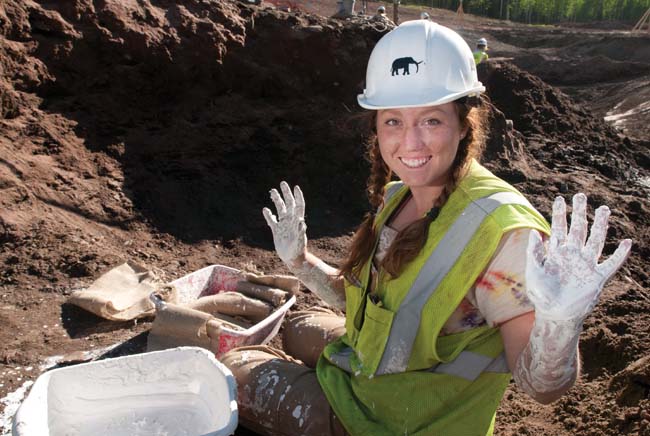
Dr. Gussie Maccracken, also known as Intern #9, in 2011 making a plaster field jacket at the Snowmastodon Dig in Snowmass Village, Colo. (Photo/Rick Wicker)
By summer 2011, the team launched an enormous, 10-week excavation. We were under a time crunch to get as many fossils out of the ground as quickly as possible in order to not stall the construction of the dam. Over 380 people dug at the Snowmastodon site, hand shoveled over 7,000 cubic yards of dirt and the Museum recovered over 5,000 large ice age fossils of mastodons, mammoths, giant ground sloths, camels, horses, deer and a bison that was almost twice the size of modern bison. In all, over 40 species of mammals, amphibians, reptiles and birds were identified from the Snowmastodon Discovery.
Before the Snowmastodon Discovery, there were no known high elevation (>9,000 ft) ice age fossil deposits. This means that the fossils are extremely precious not only to Colorado residents, but also for scientists around the world. A team of 38 scientists analyzed the series of ecosystems preserved at Ziegler Reservoir and carefully tied the changes in the flora and fauna to changes in climate that occurred during the last ice age here in Colorado, from 140,000–55,000 years ago.
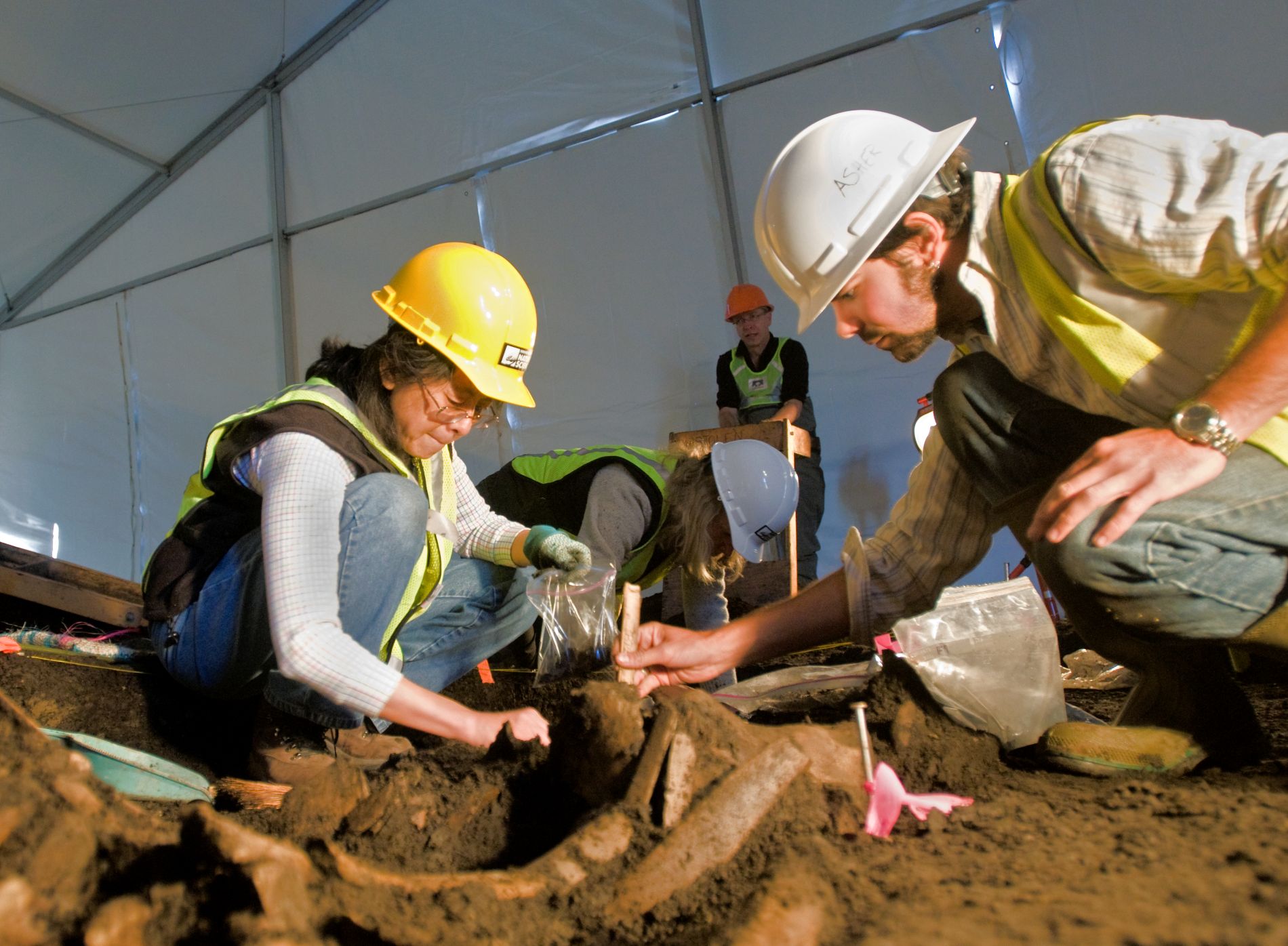
Volunteers Yanmin Huang and Brendon Asher, left to right, uncover a juvenile mammoth (EPV.60676) during the Snowmastodon excavation at Ziegler Reservoir, Colo. (Photo/ Rick Wicker)
The fossil site was an ancient alpine lake which was visited by these elephants and other animals, much like watering holes in Africa today. Fun fact, Ziegler Reservoir is home to not only the most American mastodons ever found in one location, but also the largest mastodon ever found —nicknamed “Portaloo” after its discovery underneath portable toilets.
This year, we are excited to celebrate the 15th anniversary of the Snowmastodon Discovery and these incredible creatures in the exhibition, The Secret World of Elephants. This temporary exhibition, which runs until Jan. 25, 2026, explores the evolution and biology of proboscideans, as well as their connections and representations in human cultures.
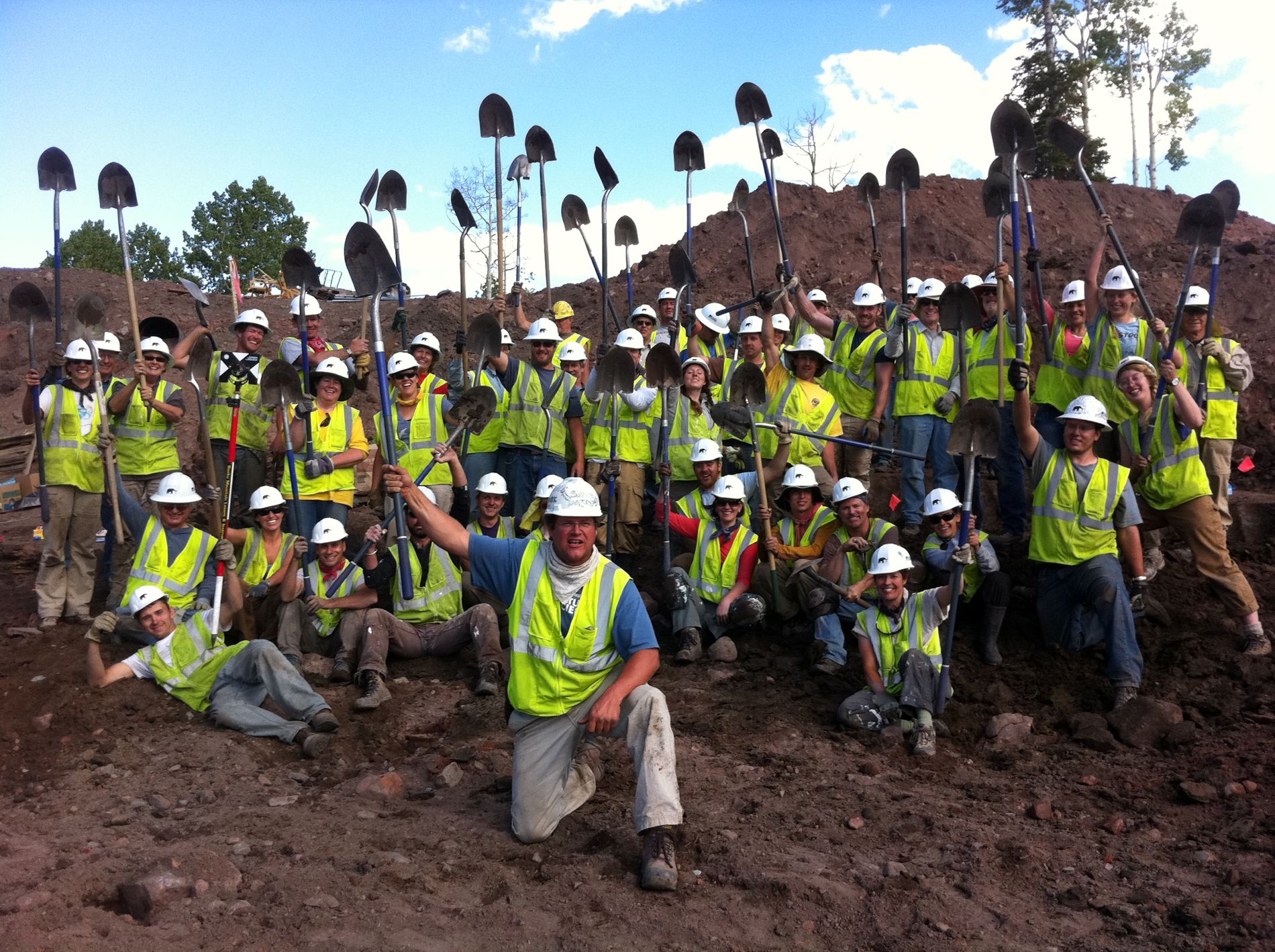
Snowmastodon excavation crew poses with their shovels in 2011. (Photo/ Ray Troll)
Dr. Gussie Maccracken is curator of Paleobotany at the Denver Museum of Nature & Science, formerly known as Snowmastodon Intern #9.
Dr. Patrick O'Connor, director of Earth and space sciences, contributed to this article.


