Pollen, Spores, and the End of the Dinosaurs: Life After Extinction with Dr. Antoine Bercovici
What happened after the asteroid hit?
Sixty-six million years ago, a mountain-sized asteroid struck Earth, triggering a global mass extinction that ended the Age of Dinosaurs. But the story didn't end there. In the months, years and millennia that followed, life slowly rebuilt itself, and some of the most important evidence comes from fossils so small they can fit on the tip of a pencil.
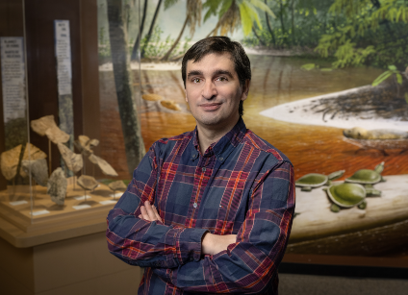
Join Denver Museum of Nature & Science Research Scientist Dr. Antoine Bercovici for a fascinating look at how fossil pollen and spores are helping scientists reconstruct one of the most dramatic chapters in Earth's history. As a paleopalynologist, Dr. Bercovici studies these microscopic fossils to understand how ancient forests collapsed, adapted and ultimately recovered after mass extinction events.
Drawing on ongoing research at the Museum, you'll explore remarkable fossil sites in the Denver area and across Colorado that preserve an unparalleled record of life before and after the asteroid impact. These discoveries reveal how devastated ecosystems gave way to new forests, new species and eventually the world we know today.
Through stunning images, scientific discoveries and stories from the field, Dr. Bercovici will uncover how some of the smallest fossils in the Museum's collections are helping answer one of the biggest questions in natural history: How does life recover when the world changes forever?